

115 Days to Kabul: How We Delivered 20 Tonnes of Medicine Through a Closed Border
At the end of January 2026, we had 20 tonnes of medicine ready to fly from Islamabad to Kabul. A week later, the route was gone. It took 115 days, a new route through the UAE and a hard test in Dubai to get every carton home. This is the full story, and what other pharma shippers can learn from it.
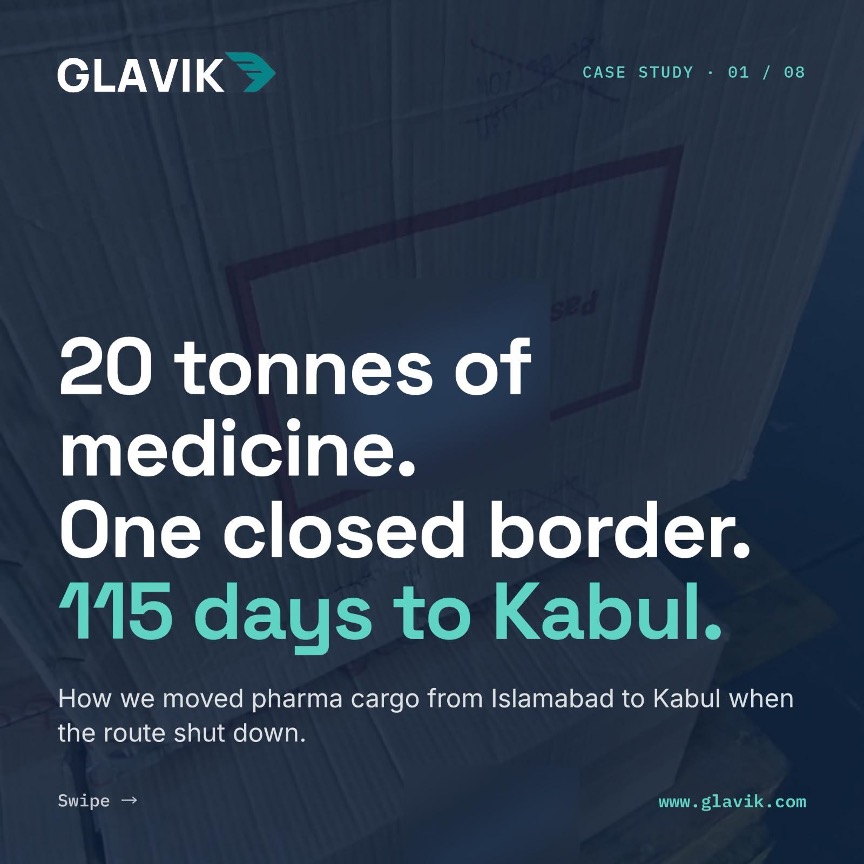
| At a glance | |
| Cargo | 20 tonnes of pharmaceuticals |
| Planned route | Charter, Islamabad to Kabul |
| Final route | Islamabad to UAE by scheduled flight, then air to Kabul |
| Time | End of January to 22 May 2026, 115 days |
| Result | Every carton delivered, every document corrected |
The plan: a charter from Islamabad to Kabul
At the end of January 2026, the plan was simple. One charter flight would carry the cargo from Islamabad straight to Kabul.
One thing was not ready. The customer’s financial instrument was still pending. We did not wait for it. We moved all 20 tonnes to Islamabad airport anyway, so the cargo was ready the moment the papers were.
The e-Form came at the eleventh hour. Customs cleared. The cargo was ready to fly.
Then the border closed
On 7 and 8 February, everything changed. The charter missed its rotation. Air trade between Pakistan and Afghanistan shut down.
Then the consignee refused delivery. Their fear was simple: Afghan customs might not clear the cargo.
So the cargo sat at Islamabad. Not for days. For weeks.
For most cargo, waiting means a delay. For medicine, it means more. Every week eats into shelf life. Every week puts more strain on the cartons. And at the other end, patients are still waiting.
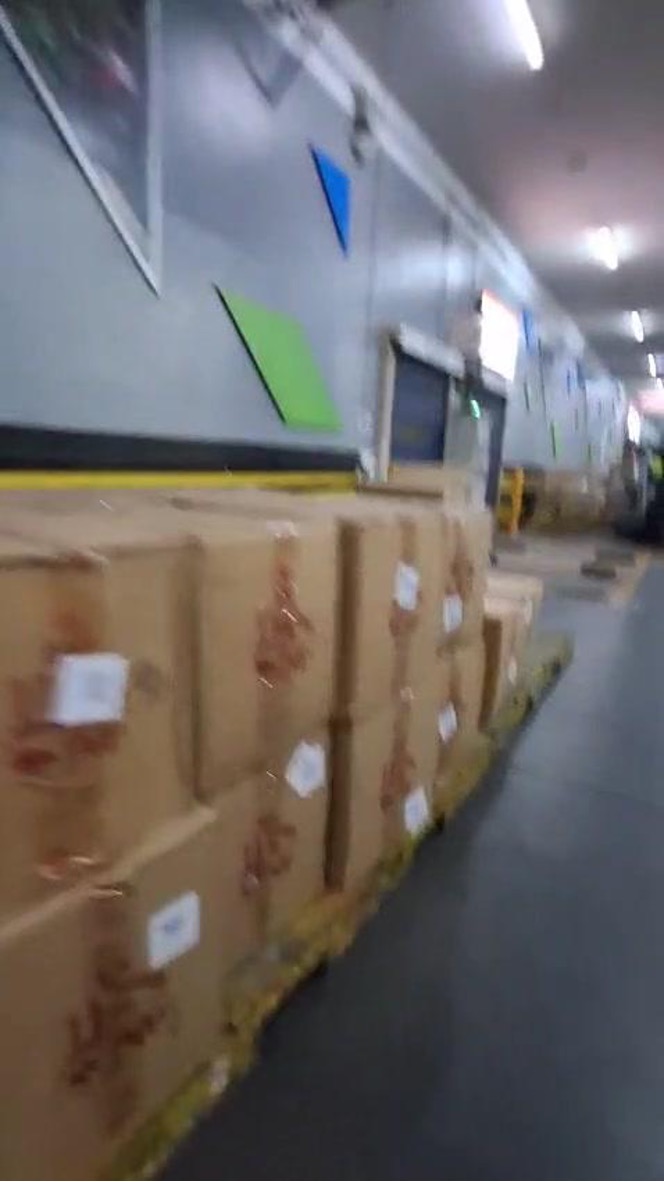
The cartons on pallets, waiting to move.
The fix: a new route through the UAE
With the direct route closed, we built a new one. The cargo would fly from Islamabad to the UAE on a scheduled flight. From the UAE, it would fly on to Kabul.
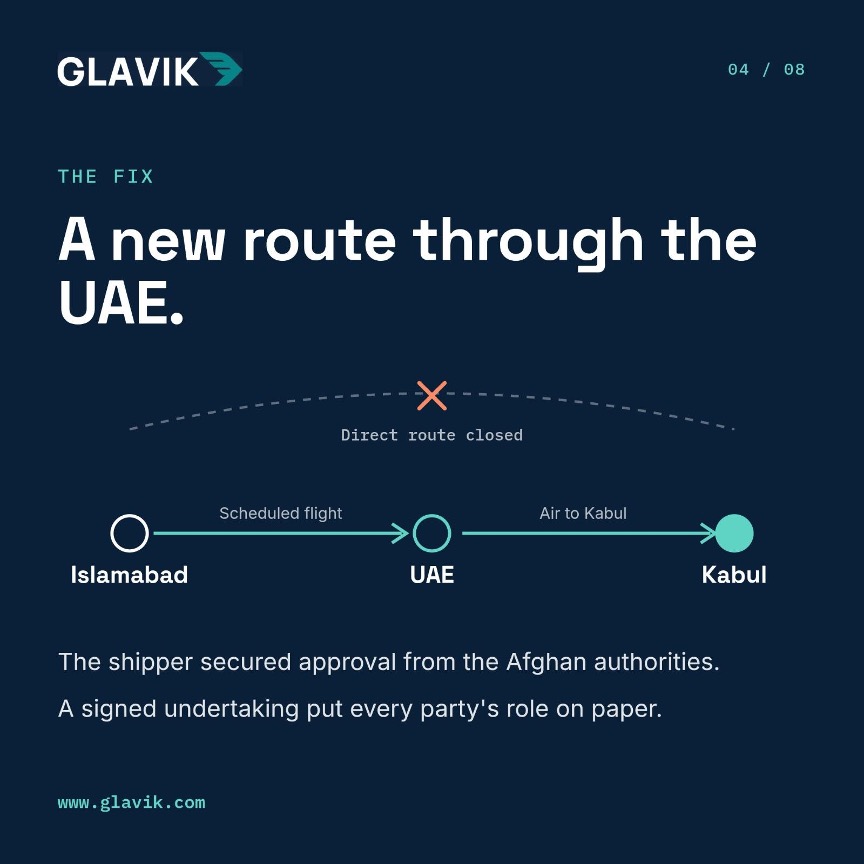
A new route needed two things before a single carton moved:
- Approval at the destination. The shipper secured approval from the Afghan authorities. That answered the consignee’s fear about clearance.
- Clear roles on paper. A signed undertaking set out what each party was responsible for: shipper, consignee, carriers, handlers and Glavik.
With both in place, the cargo moved.
Then Dubai tested us
The UAE leg was where the long wait caught up with us.
- 216 cartons were opened by Dubai Customs after an invoice mismatch.
- 30% of cartons were damaged by the long wait and had to be repacked in Dubai.
- 540 kg of weight difference had to be reconciled with the handler and customs.
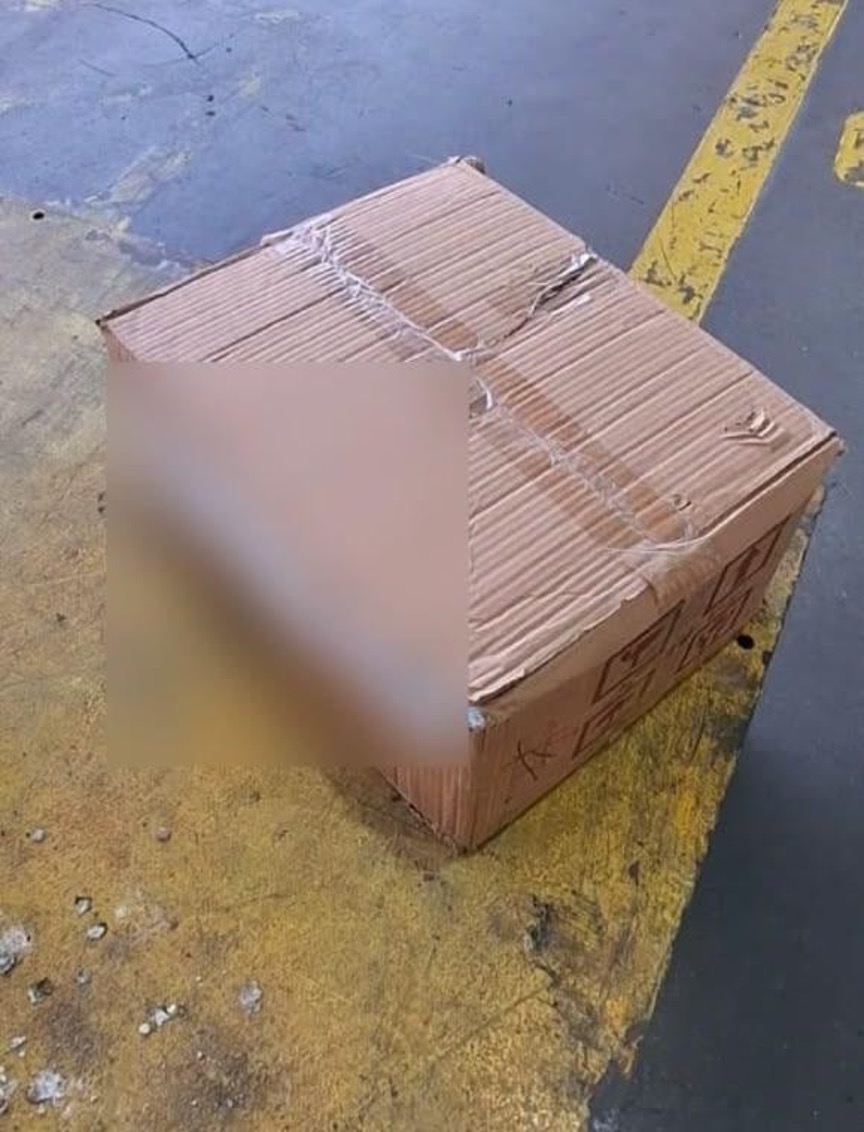
One of the cartons damaged by the long wait, before repacking in Dubai.
Each of these could have stopped the shipment. Our team on the ground worked through them one by one. We corrected the documents, repacked the damaged cartons and reconciled every kilo with the handler and Dubai Customs.
With medicine, getting there is only half the job. It also has to arrive fit to use. So throughout the journey:
- Temperature was monitored and logged at every stage, including the waiting weeks.
- Repacking was done only with the manufacturer’s QA approval.
- Shelf life was checked and recorded on arrival.
The client received the full condition history with the cargo.
Then it moved
Once Dubai was cleared, the cargo flew to Kabul in lots:
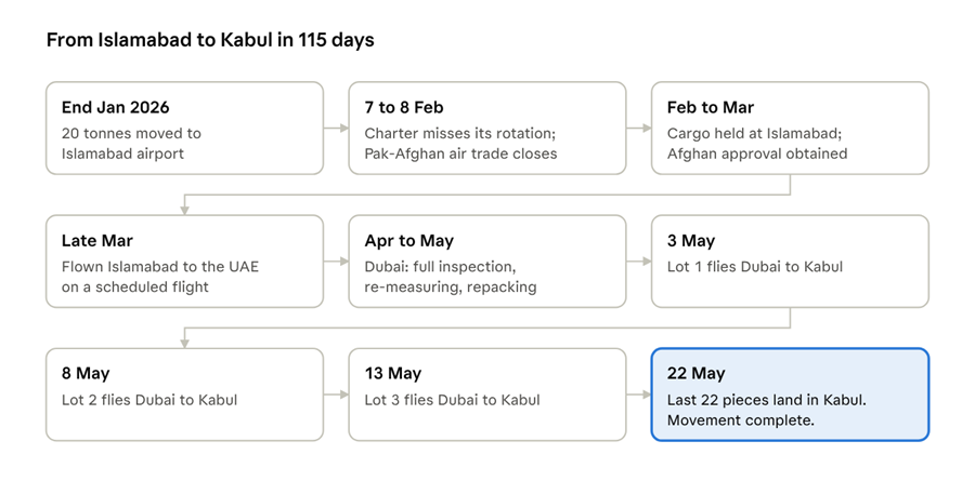
| Date | Movement |
| 22 May | Last 22 pieces land. Movement complete. |
| 13 May | Lot 3: Dubai to Kabul |
| 8 May | Lot 2: Dubai to Kabul |
| 3 May | Lot 1: Dubai to Kabul |
Every carton was delivered. Every document was corrected. From the end of January to 22 May, it took 115 days.
Six lessons for Pakistan–Afghanistan pharma logistics
- Get the paperwork right at the factory. An invoice mismatch cost us 216 opened cartons in Dubai. Errors made at the start get more expensive at every stop.
- Plan a second route before you need it. The border closed in two days. A backup route you have already checked can save weeks.
- Put every party’s responsibility in writing. The signed undertaking is what got the cargo moving again.
- Pack for delays, not for the plan. Cartons packed for a short charter had to survive weeks of waiting. 30% did not.
- Have people on the ground at every transit point. Dubai was solved by people who were there, not by email.
- Keep the product’s condition record. Temperature logs, the manufacturer’s QA approval for any repack and shelf life on arrival matter as much as the route.
FAQ: shipping pharmaceuticals from Pakistan to Afghanistan
How long did this pharma shipment from Pakistan to Kabul take?
115 days, from the end of January to 22 May 2026. The planned charter could not fly after the border closed on 7–8 February.
How did the cargo reach Kabul with the border closed?
It flew from Islamabad to the UAE on a scheduled flight, then on to Kabul by air. The shipper secured approval from the Afghan authorities, and a signed undertaking set out every party’s role.
What went wrong in Dubai?
An invoice mismatch led Dubai Customs to open 216 cartons. About 30% of cartons were damaged by the long wait and were repacked. A 540 kg weight gap was reconciled with the handler and customs.
How was the medicine’s quality protected?
Temperature was logged at every stage, repacking was done only with the manufacturer’s QA approval, and shelf life was checked on arrival.
Borders close. Medicine still has to arrive.
This shipment was not fast. But it was complete. Every carton arrived, and every record showed how it got there.
Glavik is a specialist healthcare logistics company based in Lahore, Pakistan. We handle medical equipment, pharma and dangerous goods. If you are planning pharma shipments into Afghanistan or the wider region, talk to us at glavik.com.
Shipping dangerous goods with your pharma cargo? Check your UN numbers first with the free Glavik DG Shipment Checker.