

Dangerous Goods Hazard Labels, Class 1 to 9
Every hazard label and handling mark you will see on a dangerous goods shipment. Each card says what the label means and links to the exact rule behind it.
Shipping lithium batteries, dry ice or lab samples? See our Dangerous Goods Handling service and our Lithium Battery Shipping Guides.
Explosives
Substances and articles that can explode, burn fast or throw fragments. The division number shows the hazard level. The letter is the compatibility group.
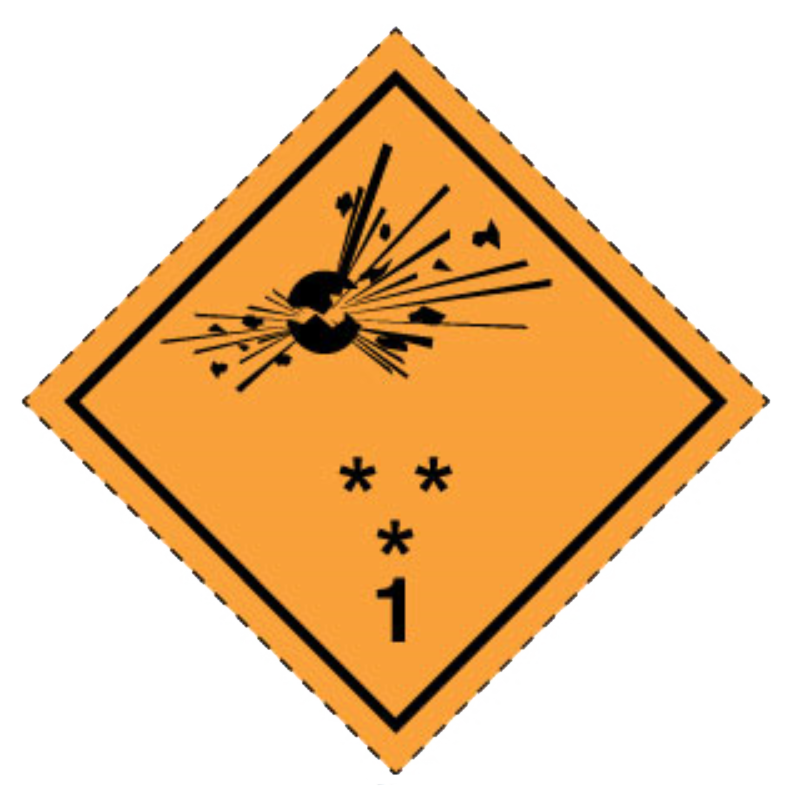
Division 1.1
Mass explosion hazard. The whole load can explode at once.
49 CFR §172.411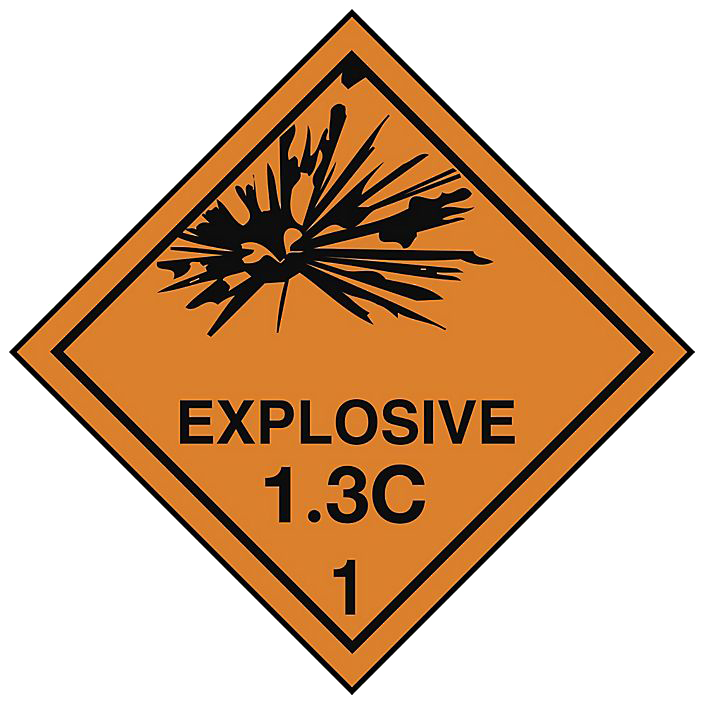
Division 1.3C
Fire hazard with minor blast or projection risk. Group C covers propellants.
49 CFR §172.411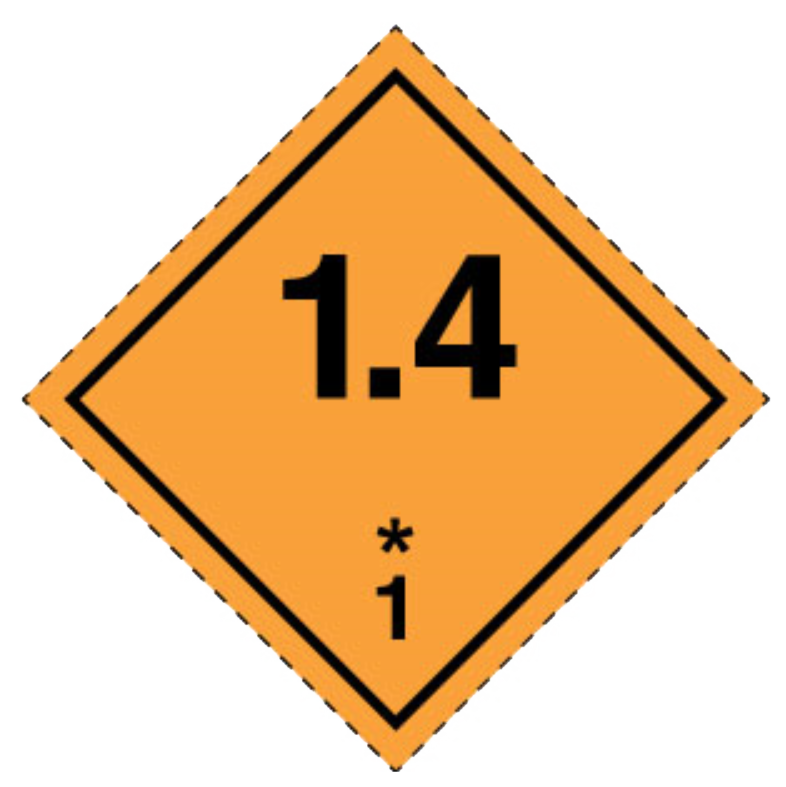
Division 1.4
Minor explosion hazard. Effects stay mostly inside the package.
49 CFR §172.411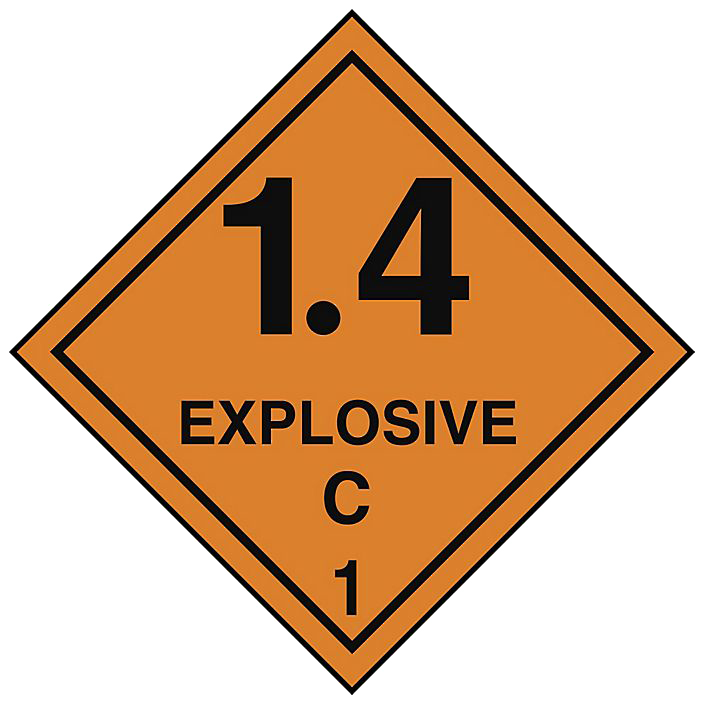
Division 1.4C
Minor explosion hazard, compatibility group C (propellant articles).
49 CFR §172.411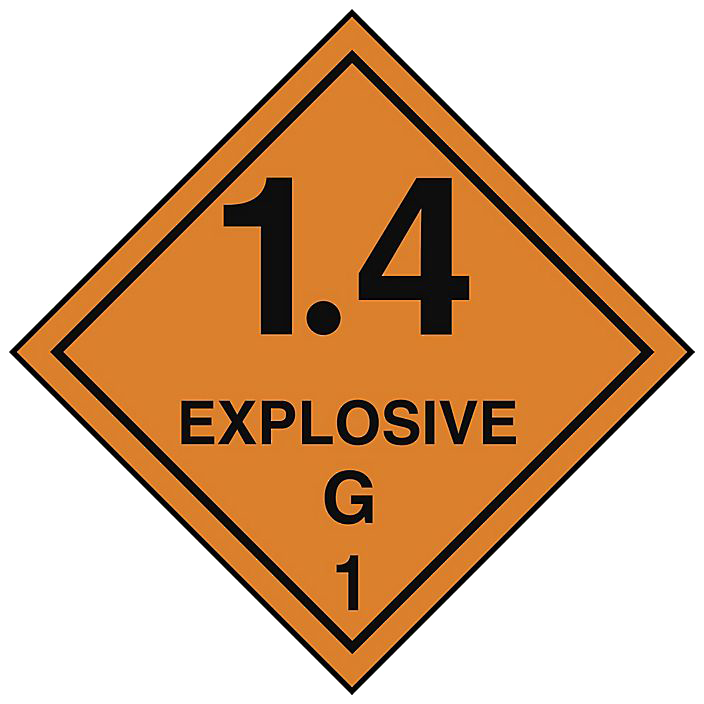
Division 1.4G
Minor explosion hazard, group G. Pyrotechnics such as fireworks and flares.
49 CFR §172.411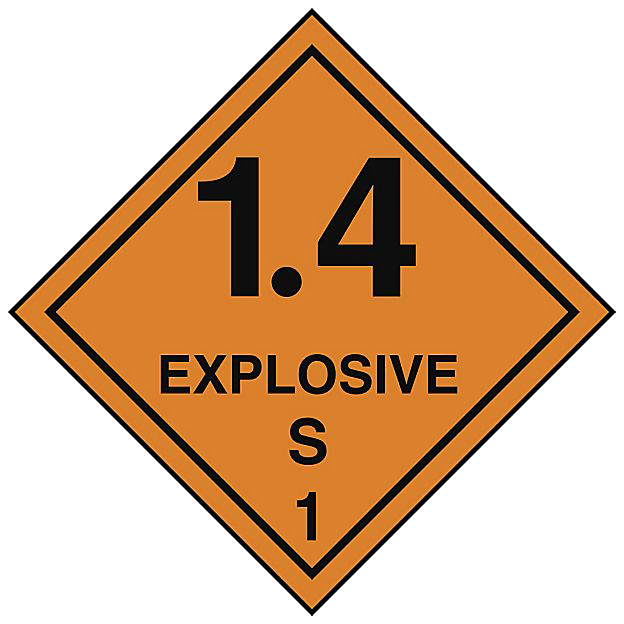
Division 1.4S
Effects stay inside the package. Includes small-arms cartridges.
49 CFR §172.411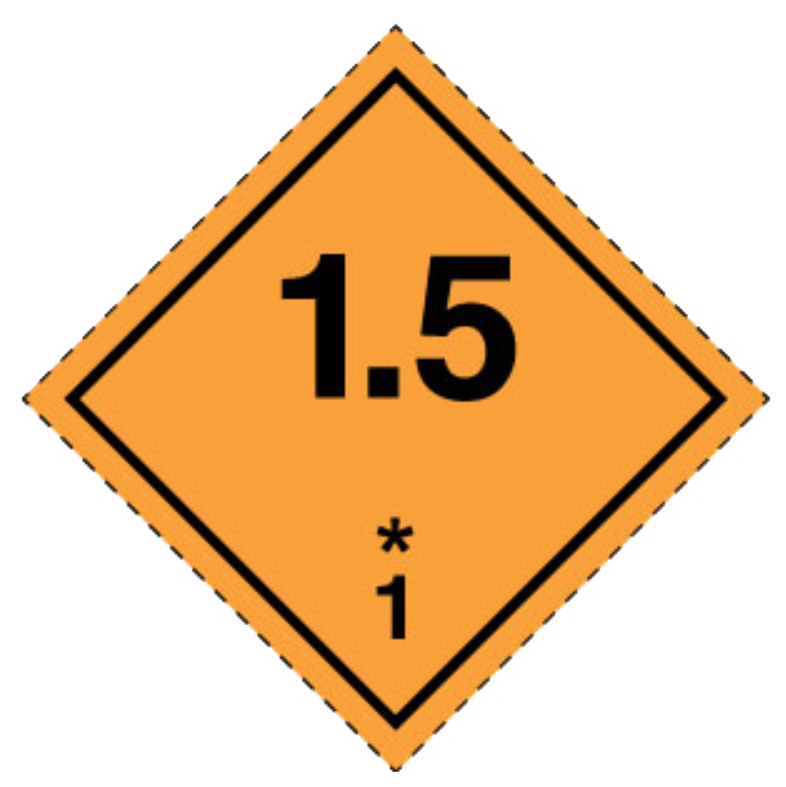
Division 1.5
Very insensitive substances that still carry a mass explosion hazard.
49 CFR §172.411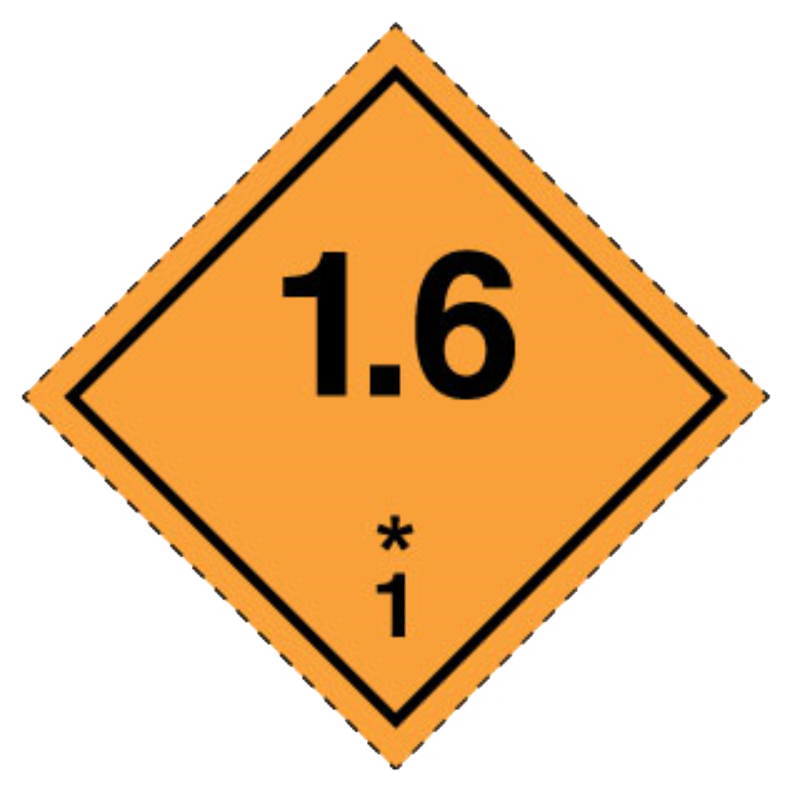
Division 1.6
Extremely insensitive articles with no mass explosion hazard.
49 CFR §172.411Gases
Compressed, liquefied, dissolved or refrigerated gases, including aerosols.
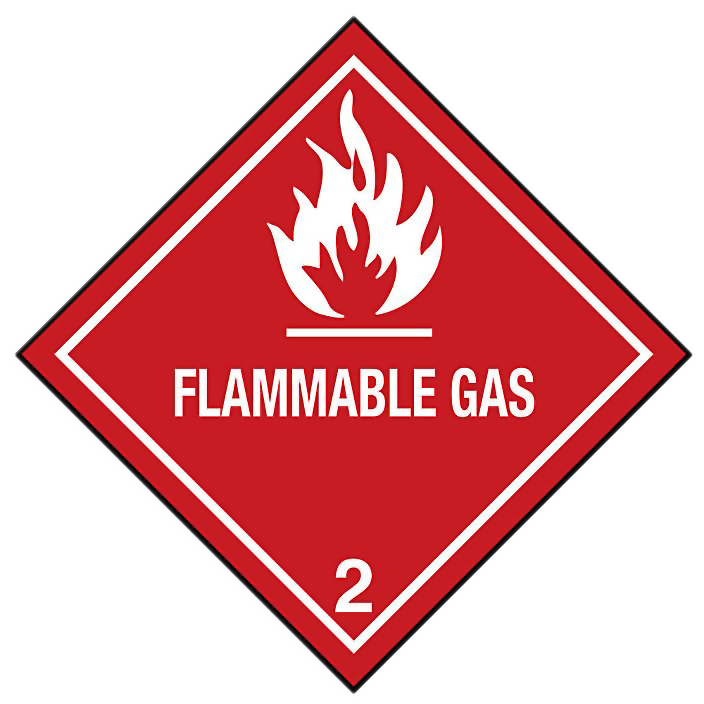
Division 2.1 — Flammable Gas
Gases that ignite in air. Examples: propane, butane, many aerosols.
49 CFR §172.417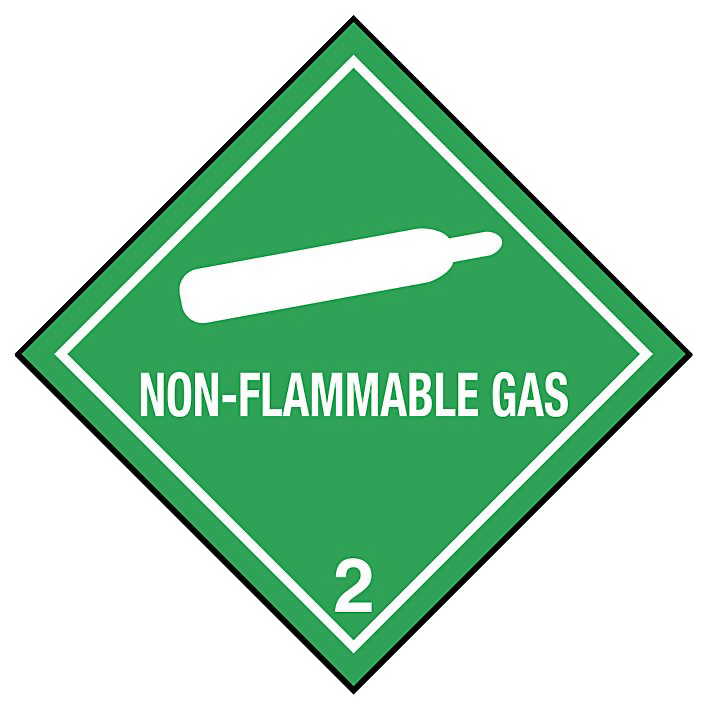
Division 2.2 — Non-Flammable Gas
Non-flammable, non-toxic gases under pressure. Examples: nitrogen, CO₂, compressed air.
49 CFR §172.415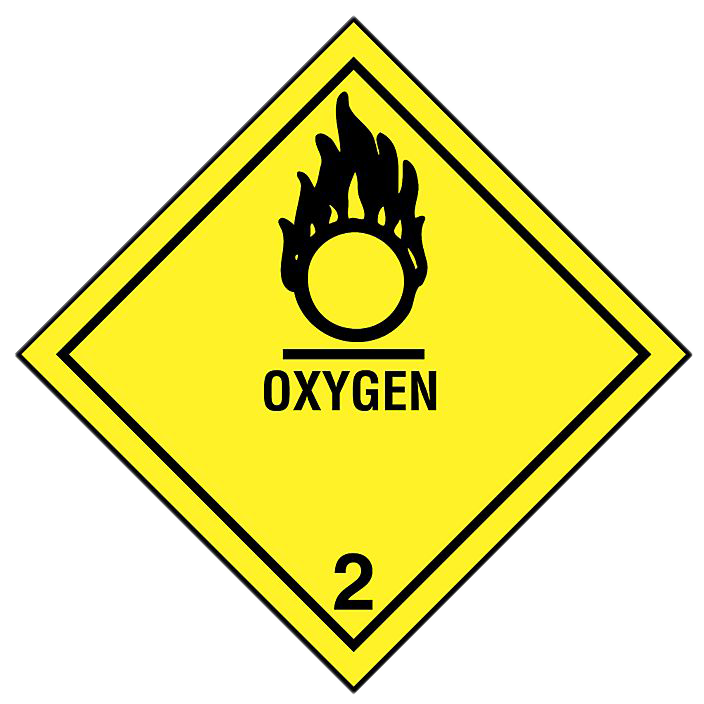
Division 2.2 — Oxygen
Used in place of the standard 2.2 label for compressed or liquid oxygen.
49 CFR §172.405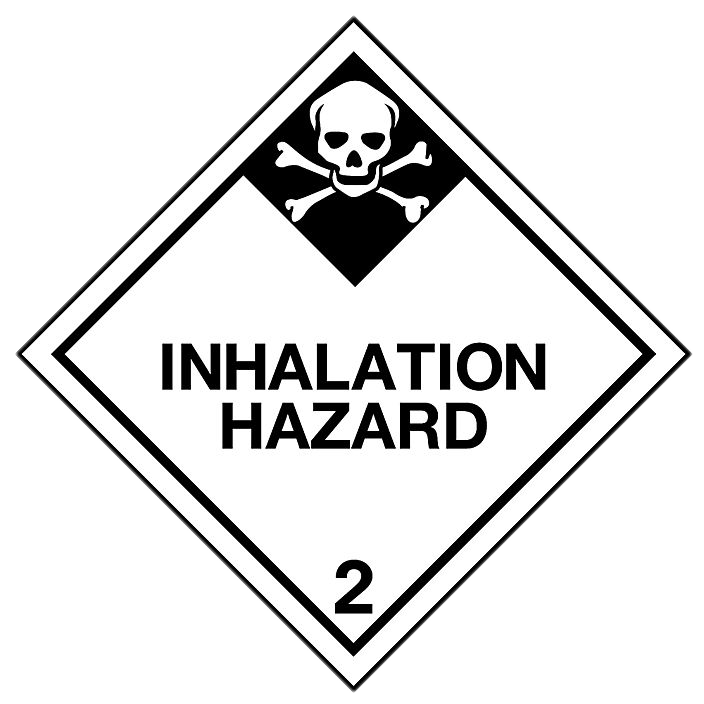
Division 2.3 — Toxic Gas
Gases that are toxic or corrosive to people. Example: chlorine.
49 CFR §172.416Flammable Liquids
Liquids that give off flammable vapour at normal temperatures.
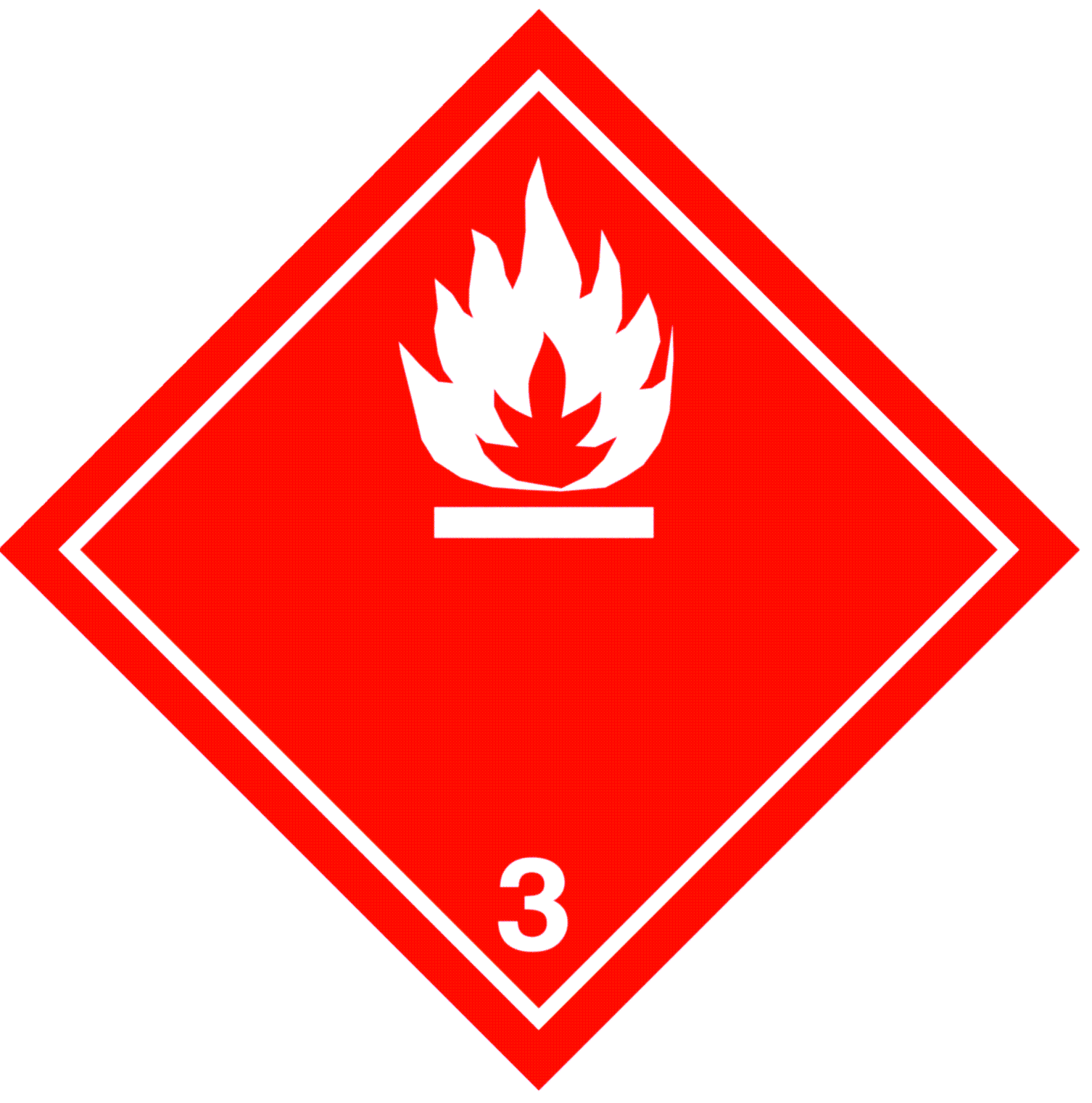
Class 3 — Flammable Liquid
Examples: ethanol, solvents, paints, perfumes, hand sanitiser.
49 CFR §172.419Flammable Solids
Solids that burn easily, heat up on their own or give off flammable gas in water.
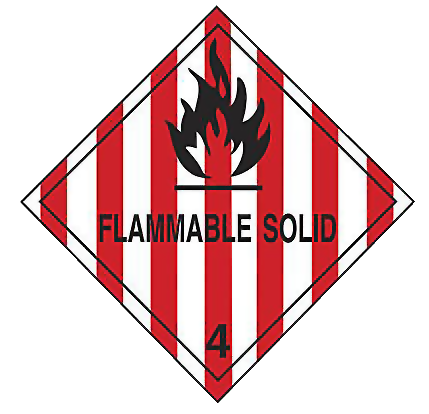
Division 4.1 — Flammable Solid
Ignites easily or burns fast. Includes self-reactive substances. Examples: matches, sulphur.
49 CFR §172.420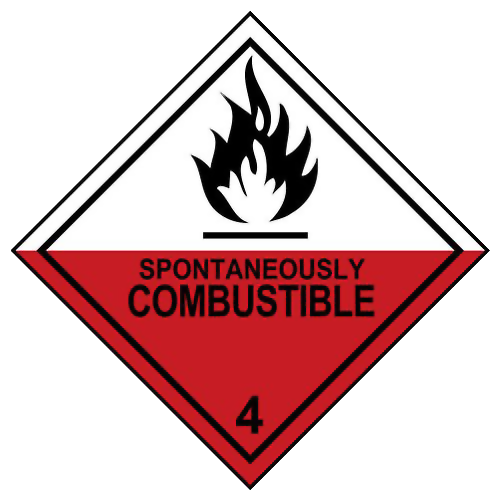
Division 4.2 — Spontaneously Combustible
Heats up and can catch fire in air without a flame. Example: white phosphorus.
49 CFR §172.422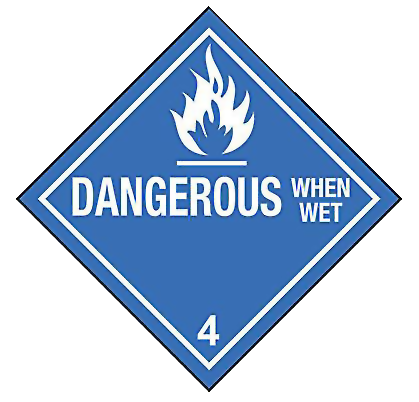
Division 4.3 — Dangerous When Wet
Gives off flammable gas on contact with water. Examples: sodium, calcium carbide.
49 CFR §172.423Oxidizers and Organic Peroxides
Substances that release oxygen and feed a fire.
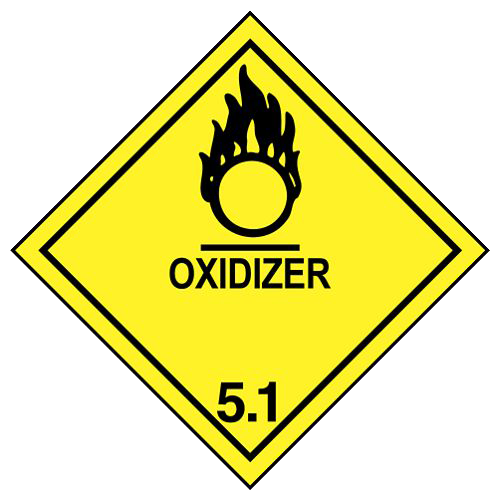
Division 5.1 — Oxidizer
Makes other materials burn more intensely. Examples: hydrogen peroxide solutions, nitrates.
49 CFR §172.426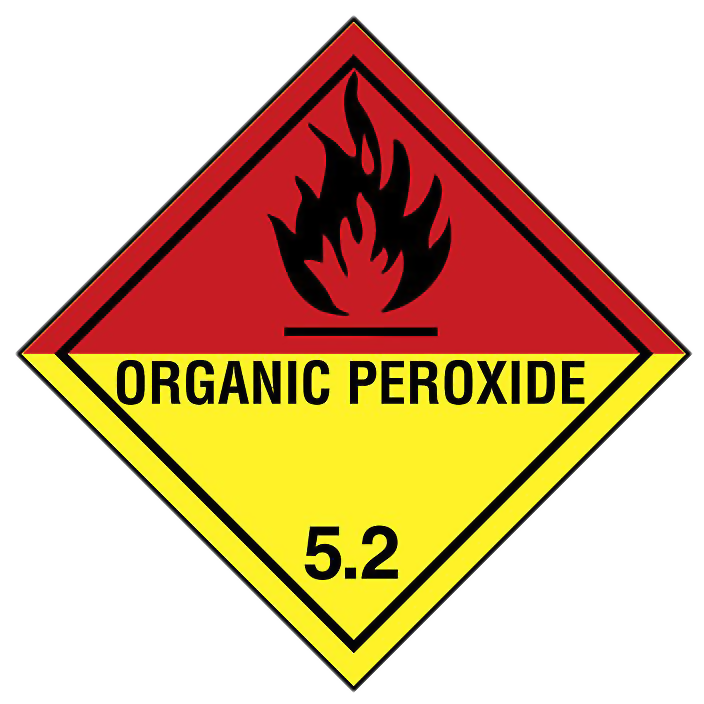
Division 5.2 — Organic Peroxide
Unstable organic compounds. Some need temperature control in transit.
49 CFR §172.427Toxic and Infectious Substances
Substances that harm people if swallowed, inhaled or touched, and materials that carry pathogens.
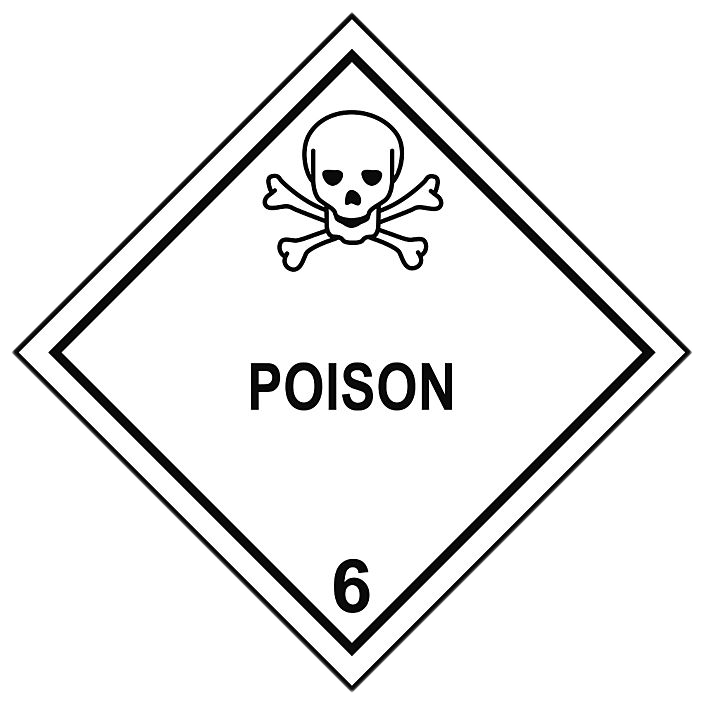
Division 6.1 — Toxic (Poison)
Toxic substances. Examples: pesticides, some lab reagents and active ingredients.
49 CFR §172.430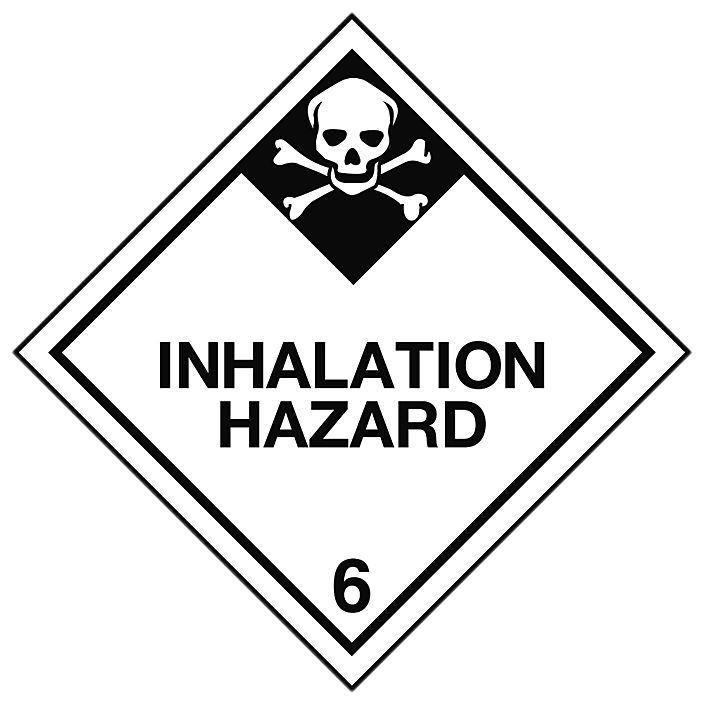
Division 6.1 — Inhalation Hazard
US DOT label for materials that are toxic by inhalation.
49 CFR §172.429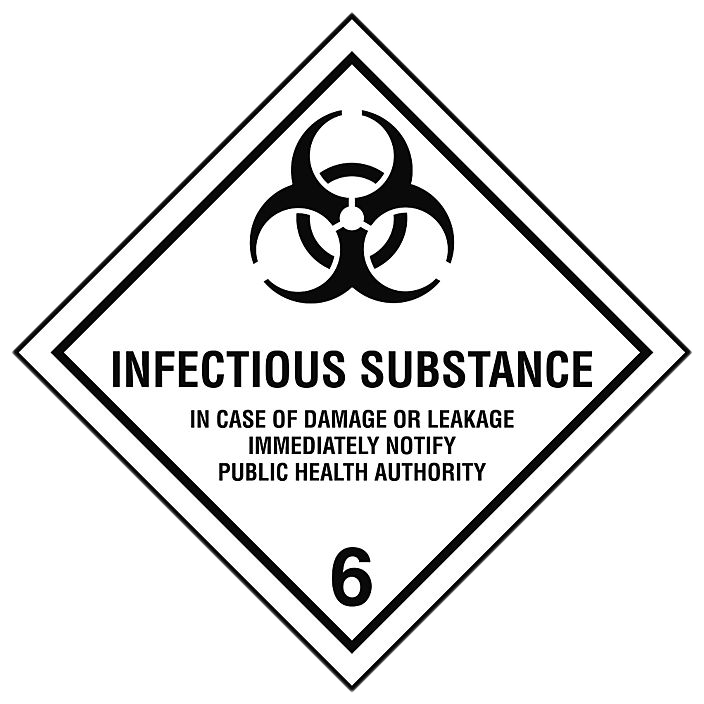
Division 6.2 — Infectious Substance
Category A infectious substances. Category B specimens (UN3373) use the UN3373 mark instead.
49 CFR §172.432Radioactive Material
The category (I, II or III) depends on the radiation level at the package surface and the transport index.
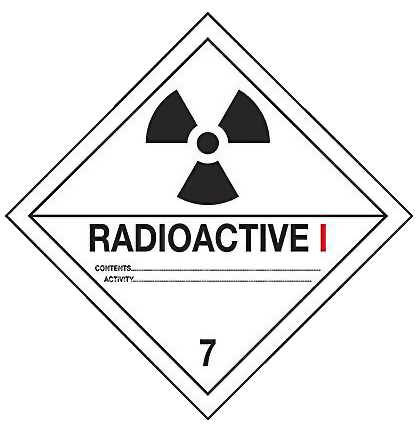
Radioactive I — White
Lowest surface radiation level. No transport index.
49 CFR §172.436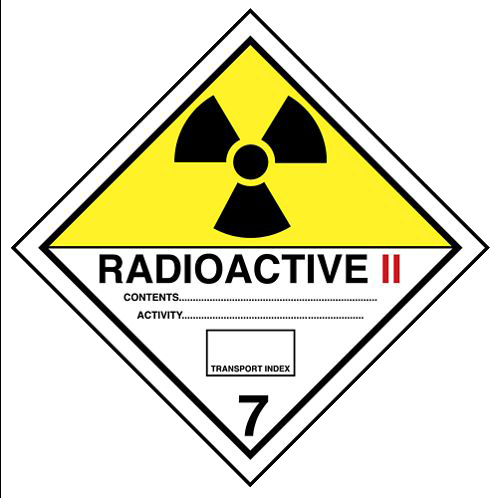
Radioactive II — Yellow
Medium surface radiation level. Transport index shown on the label.
49 CFR §172.438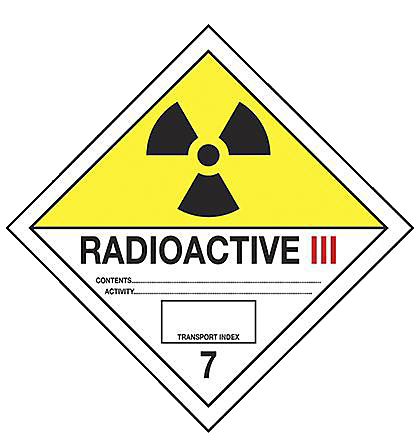
Radioactive III — Yellow
Highest surface radiation level of the three. Transport index shown on the label.
49 CFR §172.440Corrosives
Substances that destroy skin or corrode metal.
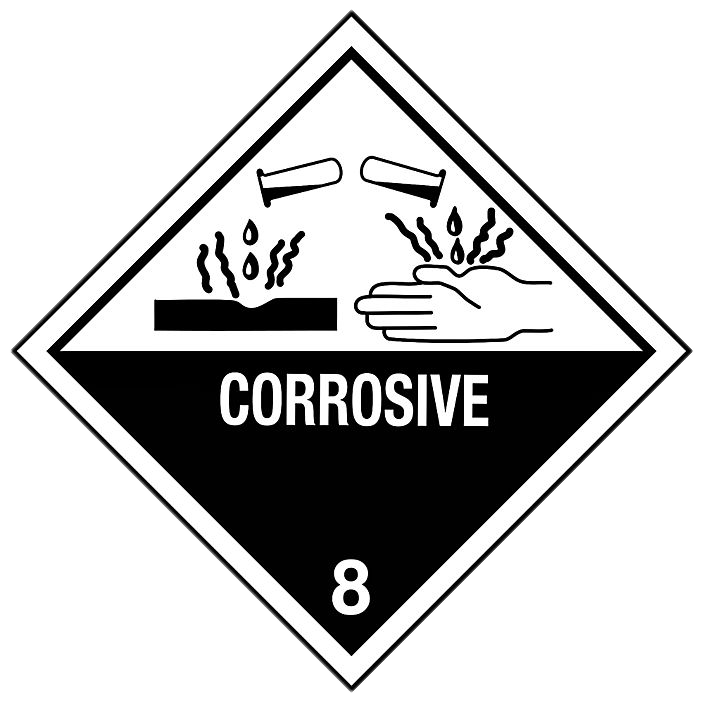
Class 8 — Corrosive
Examples: acids, alkalis, wet-cell batteries.
49 CFR §172.442Miscellaneous Dangerous Goods
Hazards not covered by Classes 1 to 8. Common in healthcare logistics.
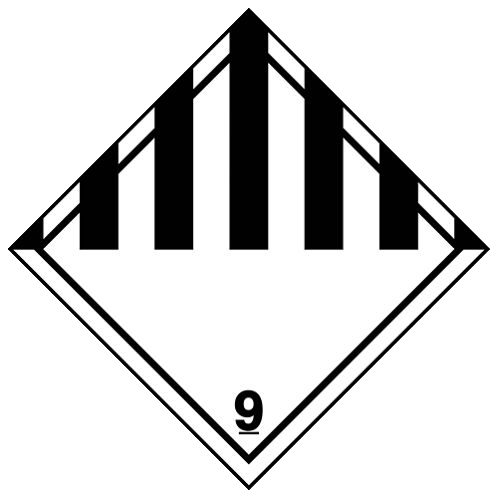
Class 9 — Miscellaneous
Examples: dry ice (UN1845), environmentally hazardous substances, some vehicles and engines.
49 CFR §172.446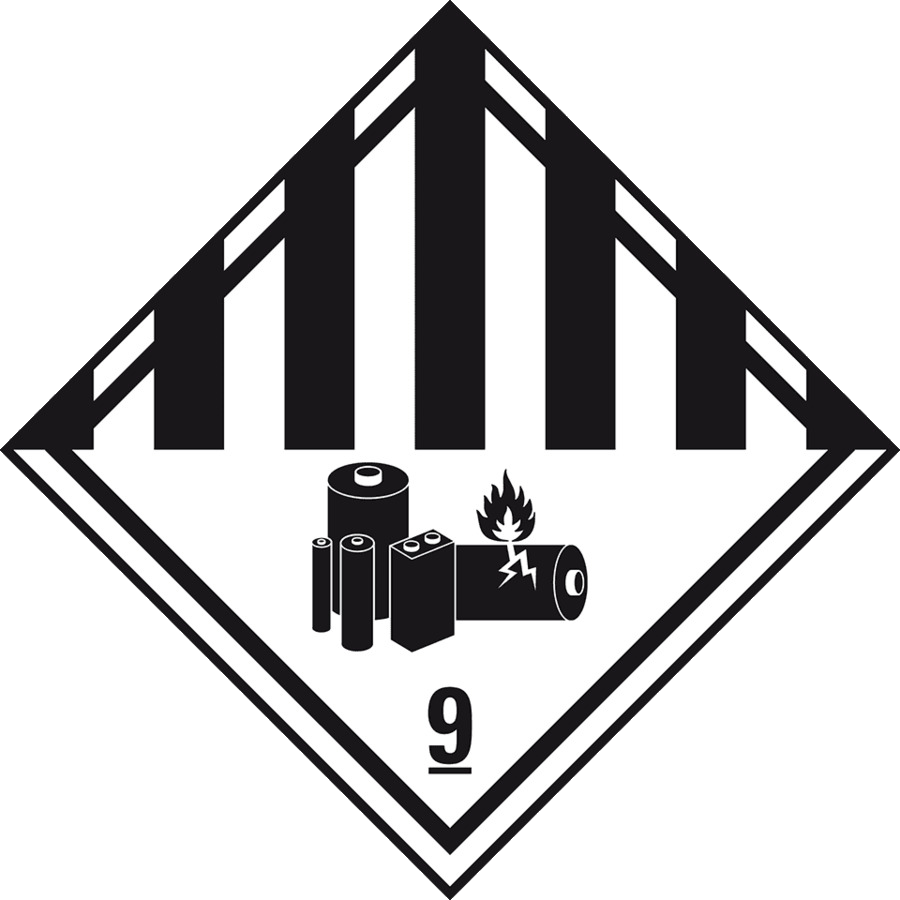
Class 9 — Lithium Battery
For fully regulated lithium-ion and lithium-metal battery shipments.
49 CFR §172.447Other Marks and Labels
These do not show a hazard class. They tell handlers how to load, stack or store the package.

Limited Quantity — "Y" (Air)
Small quantities of dangerous goods shipped by air under limited quantity rules.
49 CFR §172.315
Limited Quantity — Surface
Limited quantity shipments by road or sea.
49 CFR §172.315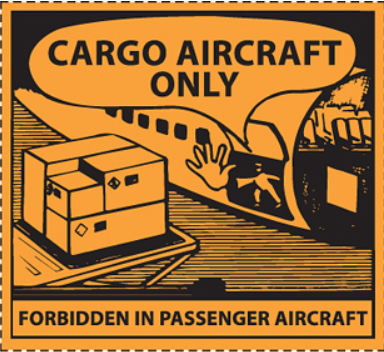
Cargo Aircraft Only (CAO)
Forbidden on passenger aircraft. May only travel on freighters.
49 CFR §172.448
Orientation Arrows — Black
Keep this side up. Required on packages with liquids in inner packagings.
49 CFR §172.312
Orientation Arrows — Red
Same meaning as the black version. Red is also accepted.
49 CFR §172.312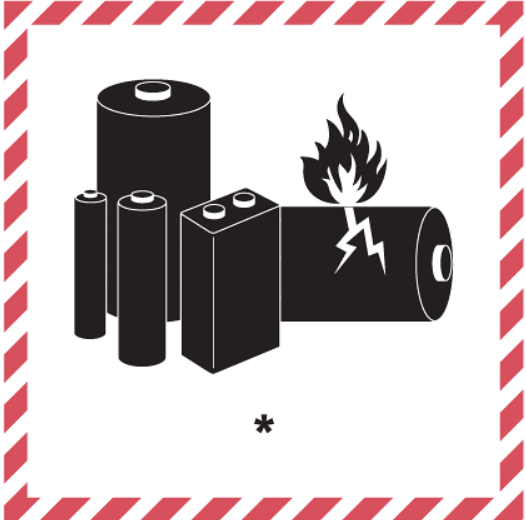
Lithium Battery Mark
Packages with smaller lithium batteries shipped under the reduced requirements.
49 CFR §173.185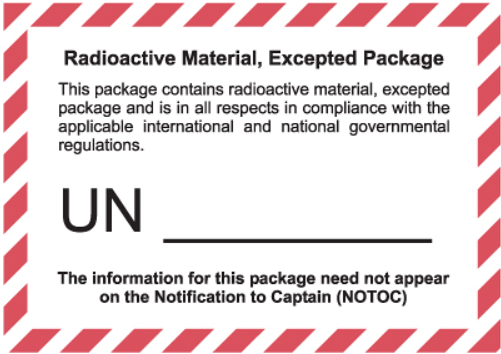
Radioactive — Excepted Package
Very small amounts of radioactive material that are excepted from most Class 7 rules.
49 CFR §173.422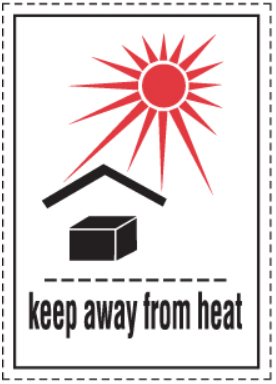
Keep Away From Heat
IATA handling label for self-reactive substances (4.1) and organic peroxides (5.2).
IATA DGR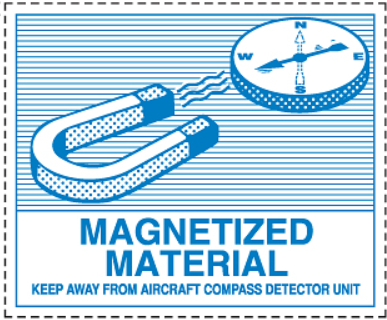
Magnetized Material
IATA handling label. Keep away from the aircraft compass detector unit.
IATA DGR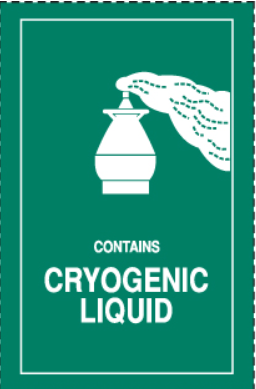
Cryogenic Liquid
IATA handling label for refrigerated liquefied gases, such as liquid nitrogen.
IATA DGRGet a Compliance-Ready Quote in 24 Hours - Guaranteed
Medical equipment, pharma & life sciences, dangerous goods - delivered safely, on time, every time.
Request a Quote +92 321 4591020Timing: 9 AM to 7 PM
Class 1 — Explosive (Generic)
Class_1_1_Generic.png
Division 1.1 — Explosive
Class_1_1-1 .png
Division 1.3C — Explosive
Class_1_3C.png
Division 1.4 — Explosive
Class_1_1-4.png
Division 1.4C — Explosive
Class_1-4C.png
Division 1.4G — Explosive
Class_1_4G.png
Division 1.4S — Explosive
Class_1_4S .png
Division 1.5 — Explosive
Class_1_1-5.png
Division 1.6 — Explosive
Class_1_6.png
Division 2.1 — Flammable Gas
Class_2-1.png
Division 2.1 — Flammable Gas (Alt)
Class_2_1-2 .png
Division 2.2 — Non-Flammable Gas
Class_2-2.png
Division 2.2 — Oxygen
Class_2-2_Oxygen.png
Division 2.3 — Toxic Gas
Class_2-3.png
Class 3 — Flammable Liquid
class_3.png
Division 4.1 — Flammable Solid
Class_4-1.png
Division 4.2 — Spontaneously Combustible
Class_4-2.png
Division 4.3 — Dangerous When Wet
Class_4-3.png
Division 5.1 — Oxidizer
Class_5-1.png
Division 5.2 — Organic Peroxide
Class_5-2.png
Division 6.1 — Poison
Class_6-1Poison.png
Division 6.1 — Toxic Inhalation Hazard (TIH)
Class_6-1_TIH.png
Division 6.1 — Toxic Substance
Class_6-1.png
Division 6.2 — Infectious Substance
Class_6-2.png
Class 7 — Radioactive I (White)
Class_7-I_White.png
Class 7 — Radioactive II (Yellow)
Class_7-II_Yellow.png
Class 7 — Radioactive III (Yellow)
Class_7-III_Yellow.png
Class 8 — Corrosive
Class_8.png
Class 9 — Lithium Battery
Class9LitBat.png
Class 9 — Miscellaneous Dangerous Goods
Class_9.png
Limited Quantity Mark — "Y" (Air / IATA)
LQ_Y_IATABOOK.png
Limited Quantity Mark — Surface
LQ_Mark_Surface.png
Package Orientation Arrows (Black)
orientation_arrows_black.png
Cargo Aircraft Only (CAO)
cao_label.png
Package Orientation Arrows (Red)
orientation_red.png
Keep Away From Heat
keepawayfromheat.png
Magnetized Material
magnetizedmaterial_label.png
Cryogenic Liquid
cryogenicliquid.png
Lithium Battery Handling Mark
batterymark_IATA.png
Radioactive Material, Excepted Package
radioactive_excepted_mark.png
Fake AI Label. Imposter.
Groucho_750.png