

What is thermal runaway?
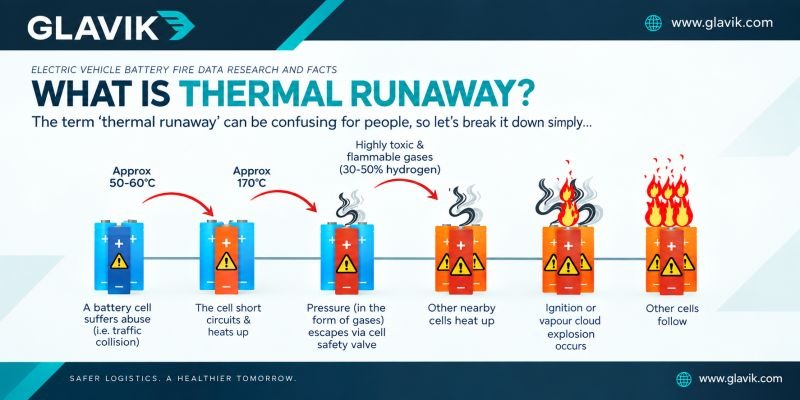
The term sounds technical. The idea is simple.
A lithium-ion battery is made of cells. Each cell stores energy. Under normal use, it stays safe.
Now a cell gets damaged or has a defect. It makes more heat than it can lose. The heat speeds up the chemical reaction inside. That makes more heat. The cycle feeds itself.
Then the heat spreads to the next cell. Then the next one. This is thermal runaway. It is hard to stop once it starts. It can bring toxic smoke, fire, and sometimes an explosion.
Why this matters in air cargo
- An aircraft hold is a closed space. Fire response in flight is limited.
- Batteries sit inside medical devices, portable monitors, ECG units, and defibrillators.
- Damage in handling, a poor pack, or a high state of charge can raise the risk.
The good news
Thermal runaway is rare. Strict rules help. UN 38.3 testing, IATA packing instructions, and state of charge limits all exist to keep it rare.
But the rules only work when the shipper follows them.
What we do at Glavik
Before any shipment with a lithium battery, we check:
-
Battery type and watt-hour rating
-
UN 38.3 test summary
-
Correct packing instruction (PI 965, 966, or 967)
-
State of charge
-
Packing, marking, and DG declaration
The shipper carries the liability for a correct declaration. So we review the paperwork before the cargo reaches the airport.
Shipping medical equipment with lithium-ion batteries? Send us the specs. We will tell you what you need before you ship.