

Packaging and Transportation of MRI Magnets – A Complete Guide

Introduction
When a hospital invests in an MRI system, they’re not just buying a machine — they’re investing in lifesaving technology. At the heart of every MRI is its superconducting magnet, a highly sensitive, multi-million-dollar component that must be handled with extreme care.
Transporting an MRI magnet is not like shipping normal cargo. It involves complex engineering, international regulations, customs approvals, and specialized logistics expertise. A small mistake can result in quench (magnet failure), financial losses, and delays in critical medical treatments.
At Glavik, we specialize in healthcare logistics and dangerous goods transport. This guide explains, in simple terms, how MRI magnets are packaged, transported, and delivered safely to hospitals worldwide.
What is an MRI Magnet?
An MRI magnet is the core of an MRI machine. It creates the powerful magnetic field needed to scan the human body.
- It can weigh several tons.
- It requires liquid helium for cooling.
- It is highly sensitive to tilt, vibration, temperature, and pressure changes.
That’s why it is considered critical cargo. Any mishandling may cause helium leakage or a complete magnet quench.
Why MRI Magnets Are Classified as Dangerous Goods
MRI magnets fall under Dangerous Goods (DG) regulations because of the liquid helium used for cooling. This makes them subject to:
- IATA DGR (Air Transport)
- IMDG Code (Sea Transport)
- ADR Regulations (Road/Rail in Europe)
Key classifications:
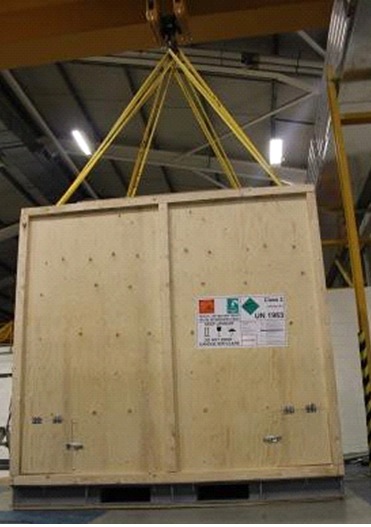
- UN1963 – Helium Refrigerated Liquid
- Special handling instructions (e.g., Cargo Aircraft Only for certain conditions).
- Even when less restricted, MRI magnets must be packed, labeled, and declared as DG cargo for safe international movement.
Pre-Shipment Planning
Before packaging begins, several steps are critical:
- Site Survey: Visit the manufacturer’s site to evaluate size, weight, and packaging needs.
- Risk Assessment: Identify risks like vibration, temperature change, or customs delays.
- Coordination: Work with manufacturer, freight forwarder, customs broker, and hospital.
- Regulatory Approvals: Secure licenses, import permits, and nuclear authority clearances (e.g., PNRA in Pakistan).
Packaging Engineering
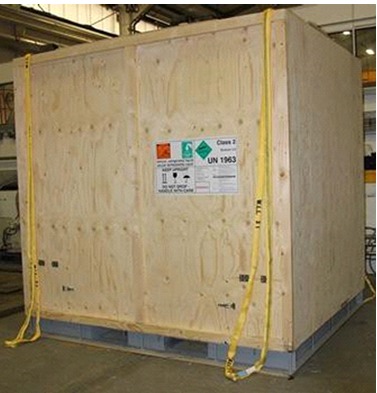
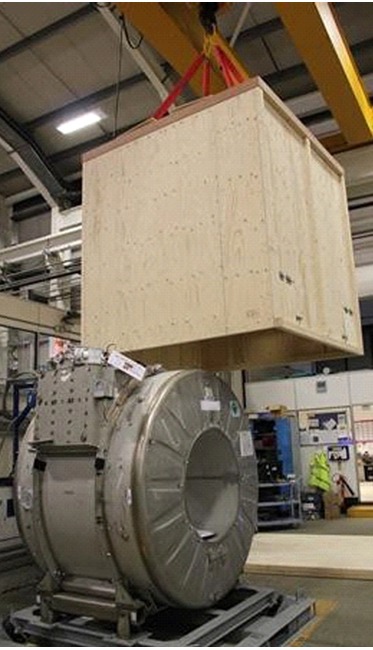
- MRI magnets require custom-built packaging. Standard wooden crates are not enough.
- Steel-reinforced frames with shock absorbers.
- Moisture and weather protection using vapor barriers.
- Shock & tilt indicators (like MONI LOG) attached to crates.
- Double crating for long-distance shipments.
- Clear DG labeling with UN numbers and handling marks.
- The goal: No tilt, no shock, no compromise.
Transportation by Mode
Road Transport
- Air-ride suspension trailers to absorb vibration.
- Escort vehicles for sensitive cargo.
- Speed limits enforced by trained drivers.
- Route survey to avoid bridges, sharp turns, or low tunnels.
Sea Transport
- Common choice for long-haul shipments.
- Loaded on flat-rack or open-top containers.
- Heavy lashing and sea fastening to survive ocean conditions.
- Weather route planning to avoid storms.
Air Transport
- Used for urgent hospital installations.
- Requires approval from airline’s Dangerous Goods Officer.
- Loaded on freighter aircraft (B747F, AN-124).
- Costly, but time-saving.
Rail Transport
- Rarely used due to vibration risks.
- Possible only on specialized medical logistics corridors in Europe.
- Customs & Regulatory Approvals
- MRI magnets are not just cargo; they are regulated medical equipment.
- Import licenses required for medical devices.
- Customs exemptions for hospitals and charitable trusts.
Dangerous Goods declarations (DGDs) filed by certified shippers.
- Nuclear authority approval (e.g., PNRA in Pakistan).
- Missing even one document can cause weeks of delays.
Site Delivery & Installation
- The last mile is often the hardest. Hospitals are not built for heavy machinery movement.
- Cranes and forklifts are used to offload magnets.
- Hydraulic jacks and air skates allow indoor movement without damage.
- Magnets must not tilt more than 15°.
- Coordination between riggers and hospital engineers ensures smooth installation.
Risk Management
Glavik ensures every shipment has a risk management plan:
- All-Risk Insurance plus Delay in Start-Up coverage.
- GPS tracking for high-value shipments.
- Backup plans for quench or helium leakage.
- Security escorts where needed.
Glavik’s Role in MRI Magnet Logistics
At Glavik, we combine DG expertise, healthcare logistics, and customs knowledge to handle MRI magnets end-to-end.
- Custom packaging & compliance.
- Air, sea, and road transport coordination.
- Customs clearance & regulatory approvals.
- Safe last-mile delivery and hospital installation support.
Case Example: We recently delivered an MRI system from Europe to Pakistan — completing all PNRA approvals, customs exemptions, and last-mile delivery with cranes and rigging equipment. The magnet was installed safely, on time, and without incident.
Conclusion
MRI magnets are not just heavy machines — they are lifesaving investments. Transporting them requires precision, compliance, and experience.
At Glavik, we promise:
Sensitive cargo. Safe delivery. Zero compromise.