
Pharmaceutical Logistics in Pakistan: How Glavik Delivers When Borders Close
Pharmaceutical logistics is not just about moving boxes. It is about protecting human life. When a single shipment is delayed, hospitals can run out of medicines, patients may miss treatment, and public trust is damaged. This is why companies across the world rely on pharma logistics specialists who understand risk, compliance, temperature control, and speed.
At Glavik, pharmaceutical logistics is a core specialization. This article explains pharmaceutical logistics in clear, simple language, highlights the real problems Pakistan is facing due to land‑route disruptions, and shows why specialist handling matters more than ever.
What Is Pharmaceutical Logistics? (Simple Explanation)
Pharmaceutical logistics means planning, storing, moving, and delivering medicines safely from factories to patients.
Unlike normal cargo, medicines:
- Must follow strict temperature rules (cold chain)
- Are sensitive to delays
- Require regulatory approvals and documentation
- Must be protected from contamination, theft, and damage
Even a small mistake can make a medicine unusable.
That is why pharma logistics is handled by specialist logistics companies, not general freight movers.
Why Pharmaceutical Logistics Is Critical for Pakistan
Pakistan is one of the largest pharmaceutical producers in the region. Local manufacturers supply:
- Domestic hospitals and pharmacies
- Afghanistan and Central Asia
- Humanitarian and NGO health programs
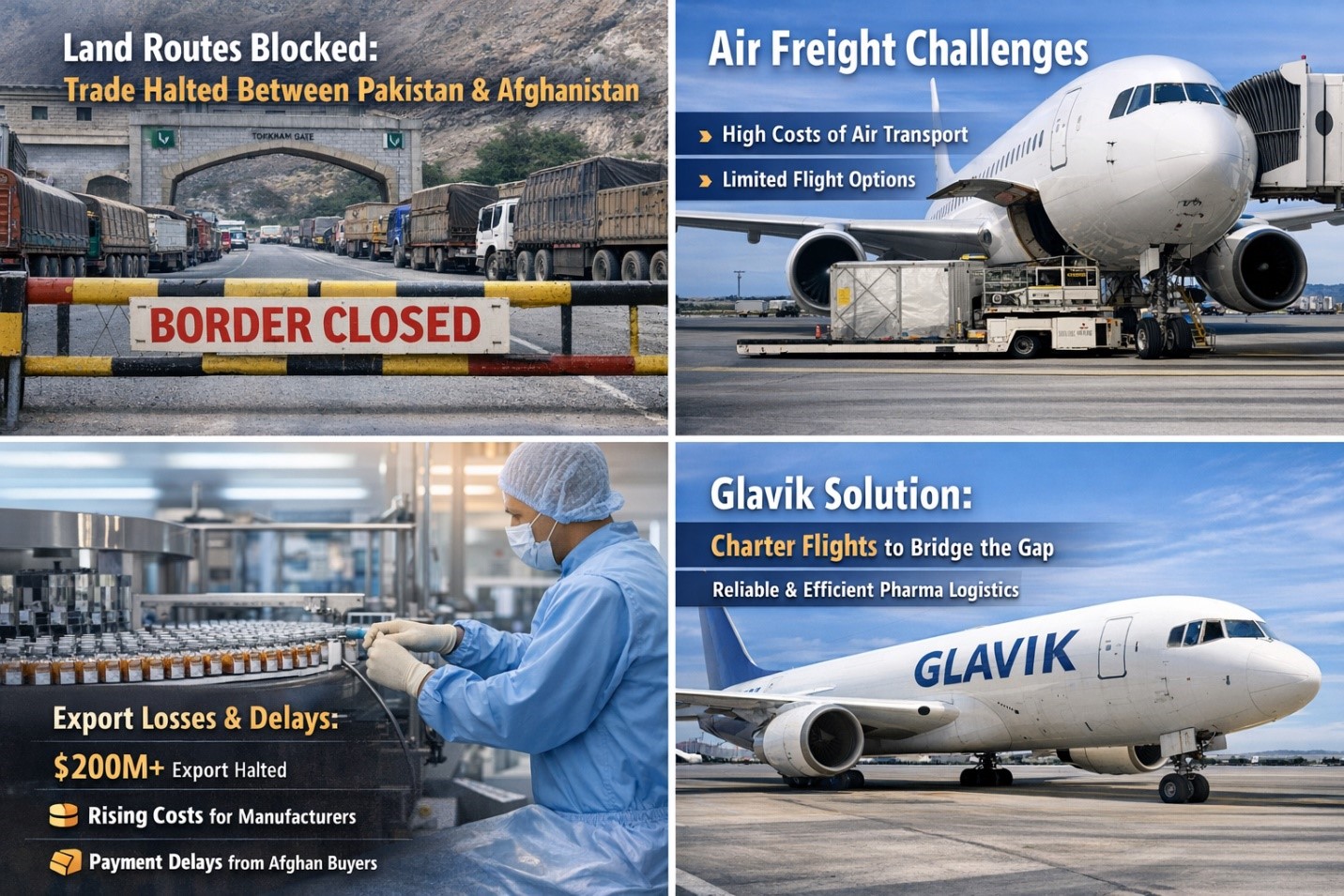
A large portion of this trade depends on land routes, especially through Torkham and Chaman borders.
When these routes stop, the entire pharmaceutical supply chain is affected.
Pakistan’s Land Route Disruption: What Really Happened
Due to recurring political tensions, security concerns, and border management issues, Pakistan’s main land crossings with Afghanistan have faced frequent and prolonged closures.
These closures have caused:
- Complete stoppage of pharma export trucks
- Long queues of temperature‑sensitive shipments
- Delays of weeks instead of days
For pharmaceutical cargo, time is not flexible.
Key Problems Caused by Land Route Closures
1. Export Losses in Pharmaceutical Trade
Pakistan exports a significant volume of medicines to Afghanistan. With borders closed, exports worth hundreds of millions of dollars annually have been disrupted.
This impacts:
- Manufacturers
- Distributors
- Logistics providers
- National export revenue
Once buyers shift to alternate suppliers, regaining that market becomes extremely difficult.
2. Temperature Sensitive Medicines at Risk
Many pharmaceutical products require:
- 2–8°C controlled temperature
- Strict handling procedures
- Minimal transit time
When trucks are stuck at borders:
- Cold chain integrity is compromised
- Medicines risk becoming ineffective
- Entire shipments may need to be destroyed
This is one of the highest‑cost failures in pharma logistics.
3. Shortages and Delays in Domestic Supply
Land route disruptions do not only affect exports.
Pakistan also depends on imported:
- Active Pharmaceutical Ingredients (APIs)
- Packaging materials
- Medical raw materials
When these imports are delayed, manufacturers struggle to produce medicines on time, leading to:
- Production slowdowns
- Higher medicine prices
- Risk of shortages in hospitals
4. Forced Shift From Road to Air Freight
When land trade routes stop, pharmaceutical companies have only one option left: air freight.
While air transport helps keep medicines moving, it creates serious challenges:
- Air freight is significantly more expensive than road transport
- Higher freight costs directly increase the landed cost of medicines
- Manufacturers absorb losses or pass costs downstream, reducing competitiveness
For price-sensitive markets like Afghanistan, these added costs place heavy pressure on exporters.
5. Limited Airline Options on the Pakistan–Afghanistan Trade Lane
Pharmaceutical air logistics to Afghanistan faces another major constraint: very limited airline availability.
Current realities include:
- Afghan carriers such as Kam Air, which operate Kabul routes, are directly controlled by Afghan authorities, creating commercial and operational limitations
- International airlines like Turkish Airlines do not operate direct Pakistan–Kabul pharma corridors
- Cargo is first routed to Istanbul, then transshipped to Kabul, adding:
- Extra transit time
- Additional handling risks
- Higher exposure for temperature-sensitive medicines
For pharmaceutical cargo, indirect routing increases both risk and cost.
6. Payment Delays Creating Financial Pressure on Exporters
Logistics disruption does not stop at delivery — it directly affects cash flow.
Due to repeated shipment delays:
- Afghan pharmaceutical distributors delay payments
- Exporters face extended receivable cycles
- Manufacturers struggle with working capital
When medicines arrive late, distributors hesitate to release funds, creating financial stress across the pharma supply chain.
7. Loss of Trust in Supply Chain Reliability
Pharmaceutical buyers value reliability over price.
Repeated disruptions:
- Damage Pakistan’s reputation as a dependable supplier
- Push buyers toward alternative countries
- Reduce long‑term contracts and nominations
In pharma logistics, trust is everything.
Why Pharmaceutical Logistics Needs Specialists, Not General Forwarders
Pharma logistics requires:
- GDP‑compliant processes
- Cold chain expertise
- Risk‑based route planning
- Regulatory knowledge
- Emergency contingency handling
General freight forwarders focus on cost.
Pharma logistics specialists focus on continuity, compliance, and patient safety.
How Glavik Operates as a Pharmaceutical Logistics Specialist
At Glavik, pharmaceutical logistics is designed around continuity during disruption.
To address the current land-route shutdown and air capacity shortages, Glavik has initiated dedicated charter flight operations for pharmaceutical cargo.
Our charter solution provides:
- Direct and controlled uplift for critical medicines
- Reduced dependency on limited commercial airlines
- Faster transit times compared to indirect routings
- Better temperature integrity for sensitive pharma products
- Predictable scheduling for exporters and distributors
By operating charter flights, Glavik helps manufacturers:
- Control landed costs
- Maintain supply commitments
- Restore confidence among Afghan distributors
This approach transforms a crisis into a controlled logistics solution.

The Way Forward for Pakistan’s Pharma Logistics
For Pakistan to remain competitive in the pharmaceutical trade, the focus must shift from volume to resilience.
Key priorities include:
- Stable and predictable border operations
- Investment in cold chain infrastructure
- Public‑private coordination for critical medicines
- Partnering with specialized pharma logistics providers
The future of healthcare depends on how well medicines move — especially in times of disruption.
Final Thought
Pharmaceutical logistics is not about trucks and warehouses. It is about people waiting for treatment.
In an environment where land routes can close overnight, only experienced pharma logistics specialists can ensure continuity.
Glavik stands at the intersection of compliance, control, and care — delivering pharmaceutical logistics solutions Pakistan can rely on.