

Air Transport of Radioactive Material (Class 7)

Class 7 hazardous materials require some of the most stringent handling protocols in the transportation industry. Despite accounting for less than 5% of dangerous goods shipments worldwide, these radioactive materials demand extraordinary care during air transport to protect both people and the environment.
We’ve observed that hazard class 7 transportation by air presents unique challenges unlike other dangerous goods categories. When shipping class 7 materials, carriers must follow complex international regulations that vary by country and material type. The radioactive hazard class encompasses everything from medical isotopes to industrial testing equipment, all requiring specialized packaging and handling. Nevertheless, air transport remains essential for many class 7 radioactive material transport needs, particularly when timely delivery is critical for medical applications.
In this comprehensive guide, we’ll explore the regulations, packaging requirements, safety protocols, and logistical challenges associated with transporting radioactive materials by air. Additionally, we’ll examine why certain carriers deny these shipments and how to navigate the complex regulatory landscape across different jurisdictions.
Understanding Class 7 Radioactive Materials
Radioactive materials stand apart from other hazardous goods due to their unique properties and handling requirements. These substances emit radiation through the decay of unstable isotopes, requiring specialized protocols throughout their lifecycle.
What qualifies as Class 7 material?
Class 7 hazardous materials include any substance containing unstable isotopes undergoing decay and emitting radiation. These materials vary widely in radiation levels and potential risk. Common examples include:
- Medical isotopes (P-32, S-35, I-125, C-14)
- Natural uranium and thorium compounds
- Radiation detector check sources
- Liquid scintillation counters
The International Atomic Energy Agency classifies radioactive sources into five categories based on safety and security concerns. Category 1 sources, typically used in radiothermal generators and irradiators, could cause permanent injury within minutes and potentially death within an hour if not properly managed. In contrast, Category 5 sources, used in x-ray fluorescence devices, cannot cause permanent injury.
For transport purposes, radioactive materials are further classified by transport index (TI) and surface radiation levels, which determine their labeling requirements. These range from WHITE-I (lowest radiation) to YELLOW-III (highest radiation). This classification is crucial for ensuring appropriate handling throughout the transportation chain.
Common uses in medicine, industry, and research
Radioactive materials serve vital roles across numerous sectors. In medicine, approximately one-third of all hospital patients are diagnosed or treated using radiation or radioactive materials. Medical procedures using radiation have been administered to about 70% of Americans, saving thousands of lives through detection and treatment of conditions from hyperthyroidism to bone cancer.
Nuclear medicine performs roughly 10 million procedures annually in the United States alone. Technetium-99m, the most common radioisotope in diagnostics, accounts for approximately 80% of all nuclear medicine procedures worldwide.
In industry, radioactive materials enable critical processes including:
- Industrial radiography for inspecting metal parts and welds
- Gaging applications for measuring thickness, density, or fill levels
- Sterilization of medical products and food items
- Leak detection and corrosion monitoring
Furthermore, research laboratories utilize radioactive materials to develop new medicines, technologies, and procedures benefiting plants, animals, and people. Medical researchers use specialized “tracers” to track how substances travel through organisms, helping diagnose and treat diseases. Similarly, agricultural researchers employ these tracers to monitor material movement through plants.
 Why air transport is used for Class 7 shipments?
Air transport offers distinct advantages for radioactive material shipments, especially for medical isotopes with short half-lives. Speed is essential – many medical radioisotopes decay rapidly, making ground transportation impractical for maintaining their effectiveness. For instance, technetium-99m, commonly used in diagnostic imaging, has a half-life of just six hours.
Consequently, air shipment becomes the only viable option for ensuring these materials reach medical facilities while still potent enough for their intended purpose. This is particularly important for rural or remote healthcare facilities that may not have on-site production capabilities.
In addition, global distribution networks rely on air transport to deliver these critical materials across international borders efficiently. The specialized packaging required for air transport also provides an extra layer of safety compared to other transportation methods.
First thing to remember about class 7 radioactive material transport is that despite the challenges, air shipment remains essential for time-sensitive applications that directly impact patient care and scientific advancement.
Regulations Governing Air Transport of Class 7 Materials
The global framework governing the transportation of class 7 hazardous materials by air represents one of the most comprehensive regulatory systems in dangerous goods management. Throughout my years working with radioactive shipments, I’ve found that understanding these regulations is crucial for safe and compliant transport.
IAEA transport regulations overview
The International Atomic Energy Agency (IAEA) established the foundation for all radioactive material transport regulations when it first published its standards in 1961. These regulations are continuously reviewed and updated to maintain the highest safety levels for radioactive hazard class materials. The IAEA’s Regulations for the Safe Transport of Radioactive Material (SSR-6) serve as the cornerstone document that all other regulatory frameworks reference.
According to the IAEA, this regulatory approach has resulted in an exemplary safety record—in over 50 years, there has never been a transport incident causing significant radiological hazards to people or the environment. This remarkable achievement stems from the IAEA’s comprehensive approach that addresses:
- Material categorization based on activity concentration
- Packaging requirements proportional to hazard level
- Documentation and labeling standards
- External radiation limits
- Quality assurance protocols
Moreover, the IAEA regulations establish safety standards providing acceptable control levels for radiation, criticality, and thermal hazards to persons, property, and the environment.
ICAO and IATA air transport rules
Since radioactive materials cross international borders regularly, the International Civil Aviation Organization (ICAO) and International Air Transport Association (IATA) have developed specialized air transport protocols based on IAEA standards.
The ICAO Technical Instructions for the Safe Transport of Dangerous Goods by Air incorporate IAEA regulations and are mandatory for all international flights. IATA, subsequently, publishes its Dangerous Goods Regulations (DGR), providing airlines with an easy-to-use manual based on ICAO Technical Instructions.
IATA’s training programs specifically address the requirements for personnel responsible for preparing class 7 radioactive material transport. These courses cover:
- Documentation requirements
- Packing provisions
- Marking and labeling standards
- Emergency response procedures
- Legal responsibilities
Interestingly, the IFALPA Dangerous Goods Committee supports the transport of all dangerous goods classes, including class 7 materials, provided the transport complies with ICAO’s Annex 18 provisions.
National regulations: US (49 CFR), Canada (TDGR, PTNSR)
Although based on international standards, national regulations introduce important variations that shippers must understand.
In the United States, the Department of Transportation (DOT) and Nuclear Regulatory Commission (NRC) work with the IAEA to regulate transportation of radioactive materials. The US regulations are codified in Title 49 of the Code of Federal Regulations (49 CFR), which incorporates the IAEA standards while adding America-specific requirements.
Across the northern border, Canada employs a dual regulatory approach through the Transportation of Dangerous Goods Regulations (TDGR) and the Packaging and Transport of Nuclear Substances Regulations (PTNSR). As with the US, Canadian regulations incorporate IAEA standards through an “ambulatory reference,” meaning IAEA regulations automatically become part of Canadian regulations after a transition period.
The TDGR often defers to the PTNSR, which may further defer to United Nations International Atomic Energy Agency standards. Hence, we observe a regulatory cascade effect where international standards filter down to national implementation.
Between these two neighboring countries, notable differences exist in exemption thresholds, documentation requirements, and enforcement approaches—creating compliance challenges for cross-border shipments of hazard class 7 materials.
National regulations: Pakistan (Air Transport of Radioactive Material)
Regulatory Authority: All transport of radioactive material in Pakistan is governed by the Pakistan Nuclear Regulatory Authority (PNRA) under the Pakistan Nuclear Regulatory Authority Ordinance, 2001.
Scope: Applies to all modes of transport, including air, and covers the entire lifecycle of transport—design, packaging, consignment preparation, loading, carriage, storage, and receipt at the destination.
Authorization Requirement:
- Any shipment of radioactive material requires prior authorization from PNRA.
- Shipments involving special forms, fissile materials, or large quantities require multilateral approval.
- Exclusive-use shipments for fissile material must be approved and documented.
Packaging & Safety:
- Packages must meet PNRA standards or, where unavailable, IAEA transport safety standards (SSR-6, 2018).
- Packages must be properly labeled, certified, and compliant with dose rate and contamination limits.
Carrier Responsibilities:
- Airlines or cargo carriers must ensure compliance with PNRA regulations.
- Information about consignor, consignee, and the nature, form, and activity of radioactive material must be submitted.
- Transport may involve specialized training, physical protection, and radiation protection programs.
Documentation & Reporting:
- A Radiation Protection Program, Radiation Emergency Plan, and Physical Protection Plan must accompany shipments.
- Any non-compliance must be reported to PNRA within 24 hours, with a detailed written report submitted within 30 days.
Transit & International Coordination:
- Transit of radioactive material requires PNRA authorization.
- Materials controlled under national or strategic export lists require separate authorization from SECDIV.
Inspections: PNRA may conduct inspections at any stage to ensure compliance.
Packaging and Labeling Requirements
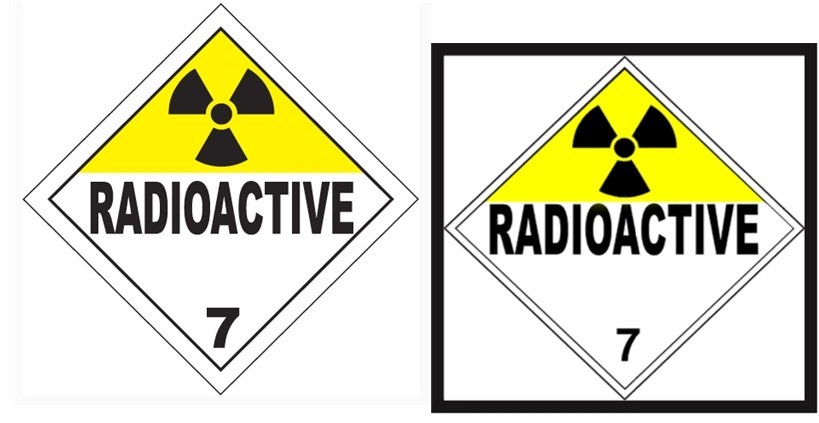
Image Source: Radiation Emergency Medical Management
Proper packaging and labeling of class 7 hazardous materials form the backbone of safe air transport. These elements work together to contain radiation, communicate hazards, and ensure regulatory compliance throughout the shipping process.
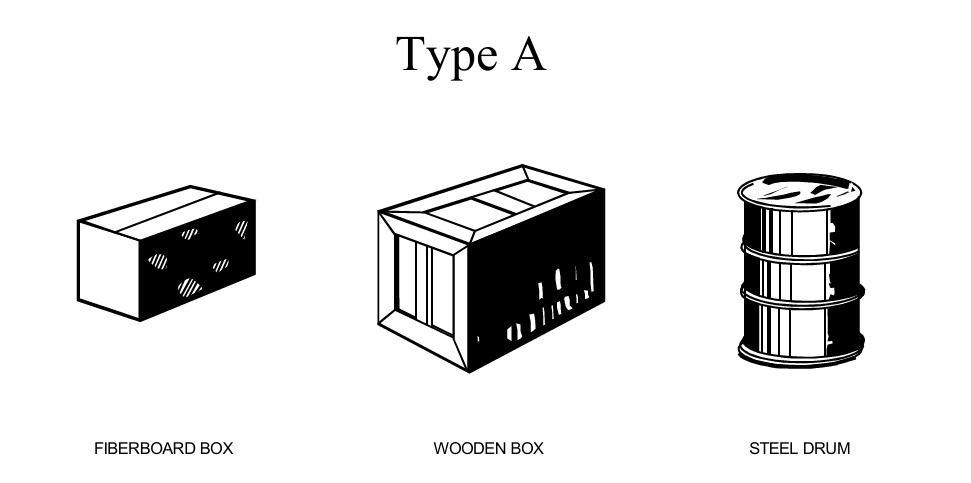
The three basic types of packages are strong tight containers, whose characteristics are not specified by regulation, followed by Type A containers, and finally Type B containers, both of which have very specific requirements in the regulations. A strong tight container is designed to survive normal transportation handling. In essence, if the material makes it from point X to point Y without being released, the package was a strong tight container. A Type A container, on the other hand, is designed to survive normal transportation handling and minor accidents. Type B containers must be able to survive severe accidents. Fissile materials, which could be involved in a criticality accident, also have additional requirements.
Excepted, Industrial, Type A, B, and C packages
The IAEA established five distinct package types for radioactive materials, each designed for specific hazard levels. Excepted packages contain extremely low radiation levels (under 5 μSv/h at any surface point) and transport everyday items like smoke detectors or medical radioisotopes in limited quantities. These packages require minimal hazard communication.
Industrial packages (IP-1, IP-2, and IP-3) typically transport low-level radioactive waste or naturally occurring radioactive materials. Type A packages, primarily used for medical radiopharmaceuticals, must withstand normal transport conditions and are subjected to tests simulating these conditions.
For highly radioactive materials, Type B packages provide exceptional protection. They must survive severe accident conditions without releasing contents or increasing radiation to dangerous levels. Meanwhile, Type C packages, introduced in 1996, offer enhanced protection specifically for air transport of highly radioactive materials.


Labeling based on radiation levels
Labels immediately communicate radiation hazards to handlers and emergency responders. Unlike other hazardous materials, radioactive substances require one of three possible labels based on external radiation levels:
- White-I: Surface radiation ≤ 5 μSv/h, no significant radiation at 1 meter
- Yellow-II: Surface radiation ≤ 500 μSv/h, transport index ≤ 1.0 mrem/h at 1 meter
- Yellow-III: Surface radiation ≤ 2 mSv/h, transport index > 1.0 mrem/h at 1 meter
The transport index (TI) – a crucial value displayed on Yellow-II and Yellow-III labels – indicates the maximum radiation level in mrem/hr measured at one meter from the package. This value helps control radiation exposure throughout transport.

Marking and documentation standards
Beyond labels, packages must display proper shipping names, UN identification numbers, and package type designations. For air transport, excepted packages must be marked with “UN2910” and include a shipper’s declaration. Typically, orientation arrows indicating “this side up” appear on packages containing liquids.
Documentation requirements vary by jurisdiction. Under the Transport of Dangerous Goods Regulations (TDGR), consignments must include documents showing shipping name and UN number of the radioactive materials. For international air shipments, an Air Waybill and Shipper’s Declaration for Dangerous Goods must accompany each shipment.
Overall, these comprehensive packaging and labeling requirements work together to maintain the extraordinary safety record of class 7 radioactive material transport, which has seen no significant radiological incidents in over 50 years of regulated shipment.
Safety Protocols and Emergency Preparedness
Beyond regulations and packaging, robust human training and emergency planning form the cornerstone of safe radioactive hazard class transport. Throughout the supply chain, personnel must be prepared to handle both routine operations and unforeseen incidents.
Training requirements for handlers and pilots
Personnel handling class 7 radioactive material transport must complete comprehensive training within 90 days of assignment. The Department of Transportation (DOT) mandates training in five critical areas:
- General awareness of regulatory requirements
- Function-specific training for job duties
- Safety training for emergency response and accident prevention
- Security awareness covering transportation security risks
- In-depth security training for high-risk shipments
Notably, this training must be refreshed every three years, with trainees working under supervision until fully qualified. For air transport specifically, IATA requires specialized instruction covering classification, packaging selection, documentation, and emergency response procedures. These certifications typically remain valid for 24 months, requiring regular renewal.
Emergency response planning and drills
Should an incident occur, immediate access to emergency response information is mandatory throughout transportation. This includes maintaining continuously monitored emergency contact numbers and detailed response protocols.
Following any breach of containment, vehicles must be removed from service until radiation levels return below acceptable thresholds. For public safety during radiation emergencies, authorities recommend the “Get Inside, Stay Inside, Stay Tuned” approach—seeking shelter behind walls that block radiation, remaining sheltered for up to 24 hours, and following official guidance via media channels.
At the governmental level, state and local authorities bear primary responsibility for initial response, with specialized support available from the Nuclear Regulatory Commission’s Headquarters Operations Center and Regional Incident Response Centers.
Security measures for high-risk materials
Materials classified as “high consequence radioactive material” require additional safeguards against potential misuse. Organizations handling these materials must implement formal security plans addressing:
- Personnel security screening consistent with privacy laws
- Prevention of unauthorized access to materials
- En-route security throughout transportation
- Security risk assessments for facilities and routes
These plans must be reviewed annually, kept in writing, and made available to responsible employees on a need-to-know basis. For highest-risk shipments, carriers may employ advanced measures such as driver relays to minimize stops, strategic route planning to avoid populated areas, and verification procedures for confirming driver and carrier identity before loading.
Challenges in Class 7 Air Transport
Despite robust regulatory frameworks, transporting class 7 hazardous materials by air faces several significant operational challenges that impact global supply chains and patient care.
Denial of shipments by carriers
The refusal to carry class 7 radioactive material is an everyday occurrence worldwide. These denials occur even when shipments fully comply with all applicable regulations. Surprisingly, a denial might be explicit (directly refusing the shipment) or implicit (through policies making routes unavailable).
Key factors behind these refusals include:
- Perception of radioactive materials as “troublesome” with minimal return on investment
- Additional training costs for cargo handlers
- Limited storage facilities for radioactive materials
- Lack of awareness about safety regulations
If your radioactive shipment can’t afford delays or rejection, talk to us now. We manage the entire process — PNRA, airline booking, packaging, acceptance, and final delivery.
Harmonization issues between countries
A major obstacle in class 7 radioactive material transport involves regulatory inconsistencies across borders. As pointed out by a 2015 Euratom Supply Agency study, the lack of harmonization between countries creates “significant risk from a security of supply perspective”.
Unfortunately, multiple regulatory layers and inconsistent international standards act as considerable disincentives for transporters. Some shipments face denial because national competent authorities aren’t recognized by other countries.
Cost and logistical constraints
Beyond regulatory hurdles, class 7 materials face unique logistical challenges. Presently, for every transit stop, a full series of permissions and approvals is required—taking anywhere from 2 to 20 days to obtain necessary permits.
Chiefly, these constraints affect time-sensitive radioactive pharmaceuticals. For instance, KLM Dutch Airlines’ policy against accepting class 7 cargo (except excepted packages) impacts not only their fleet but prevents other airlines from carrying these materials through Schiphol Airport, creating significant supply bottlenecks.
Conclusion
Transporting radioactive materials by air represents one of the most regulated and carefully managed processes in dangerous goods handling. Throughout this article, we’ve examined how Class 7 materials, despite accounting for less than 5% of hazardous shipments worldwide, demand extraordinary attention to ensure safety. Air transport remains essential, particularly for medical isotopes with short half-lives that directly impact patient care.
Safety records speak for themselves. After all, no significant radiological incidents have occurred in over 50 years of regulated radioactive material transport. This remarkable achievement stems from the comprehensive regulatory framework established by the IAEA and implemented through ICAO, IATA, and national regulations.
Challenges certainly persist in this specialized field. Carrier denials continue to create bottlenecks in the supply chain. Additionally, regulatory inconsistencies between countries complicate cross-border shipments, while logistical constraints add further complexity. These barriers particularly affect time-sensitive medical radioisotopes, potentially impacting healthcare delivery.
Organizations handling Class 7 materials must therefore develop thorough familiarity with packaging requirements, documentation standards, and emergency protocols. We’ve observed that proper training forms the foundation of safe transport, ensuring personnel throughout the supply chain understand their responsibilities.
The future of radioactive material air transport depends on greater harmonization of international regulations and improved education about the actual risks involved. Though these materials sound dangerous, properly packaged and handled radioactive substances present minimal risk during transport. This reality needs wider recognition among carriers and regulatory bodies alike.
Class 7 materials will remain vital to medicine, industry, and research for the foreseeable future. Their safe and efficient transport by air constitutes an essential link in the global supply chain that delivers life-saving treatments, enables industrial testing, and advances scientific research worldwide.
References
- [1] – https://www.nrc.gov/docs/ML1420/ML14205A207.pdf
- [2] – https://www.nrc.gov/reading-rm/basic-ref/glossary/category-of-radioactive-sources
- [3] – https://www.hemisphere-freight.com/knowledge-hub/a-guide-to-air-freighting-dangerous-goods/
- [4] – https://www.nrc.gov/reading-rm/doc-collections/fact-sheets/transport-spenfuel-radiomats-bg
- [5] – https://www.nrc.gov/about-nrc/radiation/around-us/uses-radiation
- [6] – https://www.l2businessconsulting.com/wp-content/uploads/2017/06/ONR-RAM-Transport-Security-Guidance-for-Class-7-Material.pdf
- [7] – https://www.epa.gov/radtown/radioactive-material-used-research
- [8] – http://www.iaea.org/topics/transporting-radioactive-materials
- [9] – https://www.phmsa.dot.gov/international-program/international-atomic-energy-agency
- [10] – https://www-pub.iaea.org/MTCD/Publications/PDF/Pub1200_web.pdf
- [11] – https://www.iata.org/en/training/courses/transport-radioactive-materials-virtual/dgc014vcen02/en/
- [12] – https://pmc.ncbi.nlm.nih.gov/articles/PMC7123837/
- [13] – https://snmmi.org/Web/Web/News/Articles/SNMMI-Concerned-with-IAEA-Proposed-Revisions-to-Specific-Safety-Requirements-for-the-Transport-of-Ra.Mobile.aspx
- [14] – https://www.cnsc-ccsn.gc.ca/eng/nuclear-substances/packaging-and-transport-of-nuclear-substances/faqs/
- [15] – https://www.thecompliancecenter.com/ca/how-to-safely-ship-class-7-radioactive-materials/
- [16] – https://www.wnti.co.uk/wp-content/uploads/2021/01/FS2_EN_MAR13_V2.pdf
- [17] – https://www.nrc.gov/reading-rm/basic-ref/students/for-educators/11.pdf
- [18] – https://remm.hhs.gov/transportation_hazard_id.htm
- [19] – https://www.nrc.gov/docs/ML1124/ML11245A185.pdf
- [20] – https://www.argonelectronics.com/blog/the-vital-role-of-radiation-safety-training-for-hazmat-professionals
- [21] – https://www.nrc.gov/docs/ML1215/ML12156A153.pdf
- [22] – https://www.dgonline.training/product/7-7-flight-crew/
- [23] – https://www.epa.gov/radtown/radiation-emergencies-and-preparedness
- [24] – https://www.phmsa.dot.gov/sites/phmsa.dot.gov/files/docs/Enhanced%20Security%20Brochure.pdf
- [25] – https://www.world-nuclear-news.org/articles/multinational-effort-to-tackle-denial-and-delay-of-shipments-of-radioactive-material
- [26] – https://www.neimagazine.com/analysis/the-importance-of-global-transport/
- [27] – https://world-nuclear.org/information-library/Nuclear-Fuel-Cycle/Transport-of-Nuclear-Materials/Transport-of-Radioactive-Materials
- [28] –https://na.eventscloud.com/file_uploads/38e8d983b3084137605856b7e1e0d914_CharacterofDoSSolutionsGorlinIAEATMDOS_final_.pdf